

Best Hydration Tablets for Endurance: 2026 Buying Guide
Table of Contents
- What Separates the Best Hydration Tablets for Endurance
- Sodium in Electrolyte Tablets: Reading the Label Properly
- Best Electrolyte Tablets for Runners: What to Look For
- Electrolyte Tablets vs Powders: Cost, Convenience and Control
- How to Use Electrolyte Tablets During Exercise
- Common Mistakes That Waste Your Money
- Conclusion
- Frequently Asked Questions
Last Updated: October 13, 2026
What Separates the Best Hydration Tablets for Endurance
The best hydration tablets for endurance are the ones that replace the sodium you actually lose in sweat, dissolve fast in a bottle, and contain no sugar you did not ask for. Everything else is flavour marketing. At Vitaliva, we make effervescent tablets for exactly this reason.
Here is the uncomfortable truth: most people buy hydration tablets on taste, then wonder why they still cramp at hour three. Taste is a subjective issue - what is loved by some is loathed by others. What’s important is sodium content decides almost everything. Below, we will break down how to read a label properly, when tablets beat powders, and the mistakes that quietly waste your money.
Sodium Content and Why It Decides Everything
Sodium is the electrolyte you lose in the largest quantity through sweat, and it is the one most tablets underdose. A tablet with a token pinch of sodium will taste pleasant and do very little. When you sweat heavily for over an hour, you are losing both fluid and salt, and replacing only the fluid dilutes what is left in your body.
That is why sodium content is the first number to check, not the flavour name. Often sodium content is printed as salt, as per UK guidelines. The NHS guidance on hydration and electrolytes is a sensible starting point for understanding why fluid balance matters during sustained exercise. If a product does not state its sodium content clearly, treat that as a red flag.
Sugar, Sweeteners and Keto-Friendly Formulations
Sugar-free formulations matter more than most runners admit. Sugary tablets can sit heavily in the stomach during hard efforts, and if you follow a keto or low-carb diet, hidden carbohydrates quietly undo your work.
This is where careful label reading pays off. Sweeteners such as stevia or sucralose keep the drink palatable without the sugar load.
Sodium in Electrolyte Tablets: Reading the Label Properly
Sodium in electrolyte tablets is listed in as salt in milligrams per tablet or per serving, and that number should be the deciding factor in your purchase. A tablet with a few hundred milligrams of sodium suits light sweating; heavy sweaters and long sessions need more. Compare the sodium figure against the potassium, calcium and magnesium alongside it, because a balanced profile matters more than one headline number.
Watch for these label traps:
- "Per 100ml" versus "per tablet": the numbers look small until you realise you are meant to drink the whole bottle
- Serving size games: a "serving" may be two tablets, doubling the real cost per session
- Vague electrolyte blends: if the individual mineral amounts are not listed, you cannot judge the product
- Added sugar under other names: dextrose, glucose syrup and maltodextrin all count
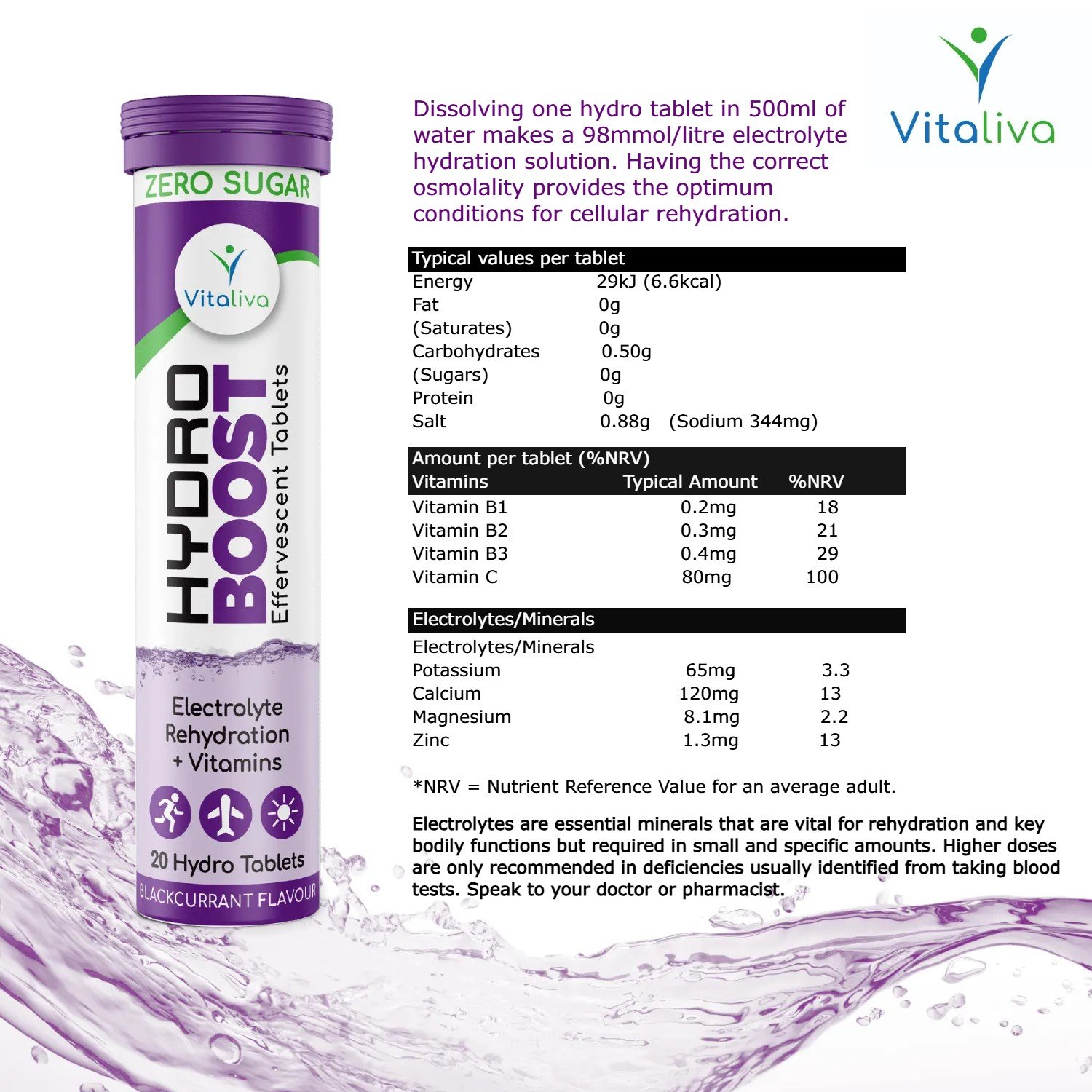
Our own Hydro Boost tablets lists 344mg of sodium along with potassium, calcium and magnesium alongside B vitamins, vitamin C and zinc.
Best Electrolyte Tablets for Runners: What to Look For
The best electrolyte tablets for runners share four traits: adequate sodium, fast dissolution, no sugar, and a format you will actually carry. Running puts specific demands on a hydration product. You are often mixing on the move, you have limited pocket space, and you cannot afford a tablet that fizzes for five minutes while you wait.
Run through this checklist before you buy:
- Sodium content clearly stated per tablet
- Potassium and magnesium included, not just sodium
- Zero sugar if you are training low-carb or keto
- Dissolves in under a minute in cold water
- Individually wrapped or in a sturdy tube so it survives a pocket
- Vegan and gluten-free if that fits your diet
- No artificial colours, flavours or preservatives
Taste matters more than runners like to admit. A tablet you dread drinking is a tablet you leave at home. UK Anti-Doping guidance on supplements is worth checking if you compete, since supplement quality varies and batch testing is not universal. Hydro Boost is manufactured in a pharmaceutical facility - to medicine standards that tests every batch. Testing of batches often includes testing for accuracy as well as impurities.
Electrolyte Tablets vs Powders: Cost, Convenience and Control
Electrolyte tablets versus powders comes down to a trade-off between cost per serving and convenience. Powders are usually cheaper per litre and let you dial the strength up or down. Tablets cost more per serving but win on portability, dosing accuracy and mess. There is no universal winner, only the right tool for your session.
Hydro Boost Blackcurrant Flavour →
Factor |
Tablets |
Powders |
|---|---|---|
Cost per serving |
Higher |
Lower |
Portability |
Pocket-friendly tube |
Needs a scoop and tub |
Dosing accuracy |
Fixed per tablet |
You measure it |
Mess |
None |
Scoop, spills, sticky tub |
Best for |
Travel, races, gym bags |
High-volume daily training |
When Powders Make More Sense
Powders earn their place when you are mixing large volumes at home and want to control concentration precisely. If you train most days and go through litres of drink, a tub is the economical choice. Tablets take over the moment you leave the house, travel, or need a reliable dose without measuring anything.
How to Use Electrolyte Tablets During Exercise
Drop one tablet into 500ml of water, let it dissolve fully, and sip steadily rather than gulping it all at once. Start drinking before you feel thirsty, because thirst lags behind actual fluid loss. For sessions over an hour, aim to drink to a plan rather than to a feeling.
Cyclist dropping an effervescent electrolyte tablet into a water bottle by a bike with a sweat-covered helmet.
A simple routine that works for most people:
- Mix one tablet in 500ml about 15 minutes before you start
- Take a few mouthfuls every 15 to 20 minutes during the session
- Mix a fresh bottle for sessions lasting over 90 minutes
- Drink plain water alongside if you are out for several hours
If you are a heavy sweater or the weather is warm, you may need a second tablet in the same bottle. Taste-test this in training first, never on race day - preparation is key.
Common Mistakes That Waste Your Money
The most expensive mistake is buying on flavour and ignoring sodium. Runners repeat this constantly, then blame the product when cramps return. The second is over-diluting: dropping one tablet into a litre when it was designed for 500ml halves your electrolyte intake without you noticing. With Hydro Boost - one hydro tab in 500ml in water is the required concentration for optimal hydration.
Other costly habits:
- Using tablets only after you cramp, when they work best taken steadily through the session
- Storing tablets in a hot car, which can affect how they dissolve
- Mixing with juice or fizzy drinks, which adds sugar and changes the balance
- Buying in bulk before testing, then being stuck with a flavour you dislike
- Assuming all tablets are equal, when sodium content varies enormously between brands
Conclusion
Getting hydration right for endurance is less about finding a magic tablet and more about matching sodium to your sweat losses and your session length.
At Vitaliva, our Hydro Boost tablets are built for exactly this problem. Each one delivers sodium, potassium, calcium and magnesium with B vitamins, vitamin C and zinc, and they are sugar-free, vegan, gluten-free and keto-friendly with no artificial colours, flavours or preservatives. They dissolve fast, travel easily, and come in Blackcurrant and Red Berry flavours.
Get started with Vitaliva and give your endurance sessions the electrolyte support they have been missing.
Frequently Asked Questions
What are the best hydration tablets for endurance exercise?
The right hydration tablets for endurance depend on three things: sodium content per serving, whether they contain sugar, and how easily they dissolve in a bottle. Look for at least 300mg of sodium per tablet if you sweat heavily or train for more than 90 minutes. Zero-sugar options suit keto and low-carb athletes, while flavoured effervescent tablets make it easier to drink enough fluid during long sessions. Always check the label for the full electrolyte profile, not just sodium.
How much sodium should an endurance athlete get during exercise?
Most sports nutrition guidance suggests 300 to 600mg of sodium per hour for sessions lasting over an hour, though heavy sweaters may need more. Sodium in electrolyte tablets varies widely, so check the label rather than assuming. Hydro Boost contains 344mg per 500ml. If your kit or face shows white salt streaks after a run, you likely lose more sodium than average and should aim towards the higher end. Spread intake across the session rather than taking it all at once. Sip it not gulp.
Are zero-sugar electrolyte tablets suitable for endurance training?
Yes. Zero-sugar electrolyte tablets replace sodium, potassium, calcium and magnesium without adding carbohydrate. For sessions under 90 minutes, that is usually enough. For longer events, you still need carbohydrate from another source such as gels or chews, because sugar-free tablets will not top up your glycogen. The advantage is that you control carb intake separately, which suits keto athletes and anyone watching total sugar consumption.
What is the difference between electrolyte tablets and powders?
Electrolyte tablets vs powders comes down to convenience, cost and dosing. Tablets are pre-measured, portable and dissolve in a standard bottle, so there is no scooping or spillage. Powders are usually cheaper per serving and let you adjust concentration, but they need a scoop and a tub travels less well. For high-volume daily use at home, powder can work out cheaper.