

Daily Electrolyte Intake for Active Adults: 2026 Guide
Table of Contents
- How Much Daily Electrolyte Intake Do Active Adults Need?
- Electrolytes for Exercise: What Training Actually Depletes
- Electrolyte Replacement After Sweating: Timing and Amounts
- Signs of Electrolyte Imbalance You Should Not Ignore
- Water vs Electrolyte Drinks: Which One Fits Your Session?
- How to Hit Your Daily Intake Through Food and Supplements
- When to Speak to a Healthcare Professional
- Frequently Asked Questions
Last Updated: October 16, 2026
How Much Daily Electrolyte Intake Do Active Adults Need?
Daily electrolyte intake for active adults is the amount of sodium, potassium, magnesium and calcium your body needs to replace what training, heat and everyday living remove. Get it roughly right and you feel sharper in sessions, recover faster and stop cramping at 6am. Get it wrong and no amount of extra water fixes the problem.
This guide from Vitaliva breaks down what each mineral does, how sweat rate changes your targets, and how to hit those targets through food and supplements without overthinking it.
Sodium, Potassium, Magnesium and Calcium: What Each One Does
Each electrolyte has a distinct job, and topping up one while ignoring the others rarely works.
- Sodium is the main electrolyte lost in sweat. It holds fluid in the right places and supports nerve and muscle signalling.
- Potassium works alongside sodium to regulate fluid balance and muscle contraction.
- Magnesium supports muscle relaxation, energy metabolism and normal nerve function.
- Calcium is essential for muscle contraction and bone health.
Most people eating a mixed diet get enough potassium, magnesium and calcium from food. Sodium is the one active adults consistently under-replace, because it is the mineral sweating strips out fastest.
Daily Targets and Why Sweat Rate Changes Everything
There is no single daily figure that fits every active adult. Needs shift with how much you sweat, how hard you train, and how hot it is.
A practical approach many sports nutritionists use is to start from a balanced diet and then replace sodium lost through sweat, rather than chasing a fixed number on a label. Two people doing the same session can lose very different amounts of salt, so a personalised estimate beats a generic target every time.
The most useful habit is knowing roughly how much you sweat per hour of training. Weigh yourself before and after a session, note how much you drank, and the difference gives you a working estimate to build from.
Electrolytes for Exercise: What Training Actually Depletes
Training depletes sodium above all else, with smaller losses of potassium, magnesium and calcium. That hierarchy matters, because it tells you where to focus your replacement.
Sweat is mostly water, but it carries dissolved sodium and, in smaller amounts, the other electrolytes. The harder and longer you go, the more you lose. A short, easy session in cool conditions may barely move the needle. A long, intense effort in the heat can leave you noticeably depleted.
This is why electrolytes for exercise are not a single product decision. They are a question of matching your intake to the session in front of you.
Electrolyte Replacement After Sweating: Timing and Amounts
Electrolyte replacement after sweating works best when you start within the first hour and sip steadily rather than gulping it all at once. Your body absorbs fluid and sodium more efficiently in smaller, regular amounts.
If you have trained hard or been out in the heat, aim to replace fluid gradually over the hours that follow, alongside a sodium source. A flavoured electrolyte drink often helps here, because people simply drink more of something that tastes good than they do of plain water.
Why Hot Weather and Long Sessions Raise Your Needs
Heat and duration are the two biggest multipliers on your electrolyte needs. A 30-degree day can push sweat losses far beyond what a cool-weather session produces, and sessions lasting over an hour deplete more than short bursts.
If you are training in the heat or going long, treat your intake as something to plan rather than improvise. Carry your electrolytes with you and drink to a schedule, not just to thirst.
Signs of Electrolyte Imbalance You Should Not Ignore
Signs of electrolyte imbalance include muscle cramps, fatigue, headaches, dizziness, nausea and a general feeling of being "off" after training. These are your body's early warnings, and they are worth acting on rather than pushing through.
Milder signs often show up first: heavy legs, a dull headache, or feeling unusually tired the day after a session. Left unaddressed, they can progress to more obvious cramping and light-headedness.
If you notice these signs regularly, look at your sodium intake first, since it is the electrolyte most commonly under-replaced by active people. Persistent or severe symptoms, however, are a reason to seek medical advice rather than self-treat.
Water vs Electrolyte Drinks: Which One Fits Your Session?
Water is enough for short, easy sessions. Electrolyte drinks earn their place when you sweat heavily, train long, or exercise in the heat. The choice comes down to how much you are losing, not to habit.
For a gentle 30-minute walk or a light gym session, plain water and a normal diet cover you. For anything longer, hotter or sweatier, adding electrolytes helps you rehydrate more effectively and keeps your mineral balance in check.
Hydro Boost Blackcurrant Flavour →
A simple way to decide:
Session type |
Duration |
Best choice |
Why |
|---|---|---|---|
Easy walk or light gym |
Under 45 minutes |
Water |
Losses are minimal |
Steady cardio |
45-90 minutes |
Water or electrolytes |
Depends on sweat rate |
Hard or long training |
Over 90 minutes |
Electrolyte drink |
Sodium losses climb |
Hot-weather exercise |
Any length |
Electrolyte drink |
Heat raises sweat losses |
How to Hit Your Daily Intake Through Food and Supplements
You can meet most of your daily electrolyte intake through food, then use supplements to cover the gaps that training and heat create. Food first, supplements to top up, is the pattern that works for most active adults.
Everyday foods do a lot of the work. Salty foods, leafy greens, nuts, seeds, dairy and fruit all contribute. Supplements are most useful when you need a fast, portable, measured dose, which is exactly where a good electrolyte tablet fits.

This is where our Hydro Boost tablets come in. Each effervescent tablet contains sodium, potassium, calcium and magnesium, plus a blend of B vitamins and vitamin C, and zinc for added immune support. The electrolyte blend is formulated to make a hydration solution of optimal concentration, so you get a balanced dose rather than a random sprinkle of salt. Each tablet provides 100% of the nutritional reference value of vitamin C, which supports collagen synthesis, immunity and antioxidant protection.
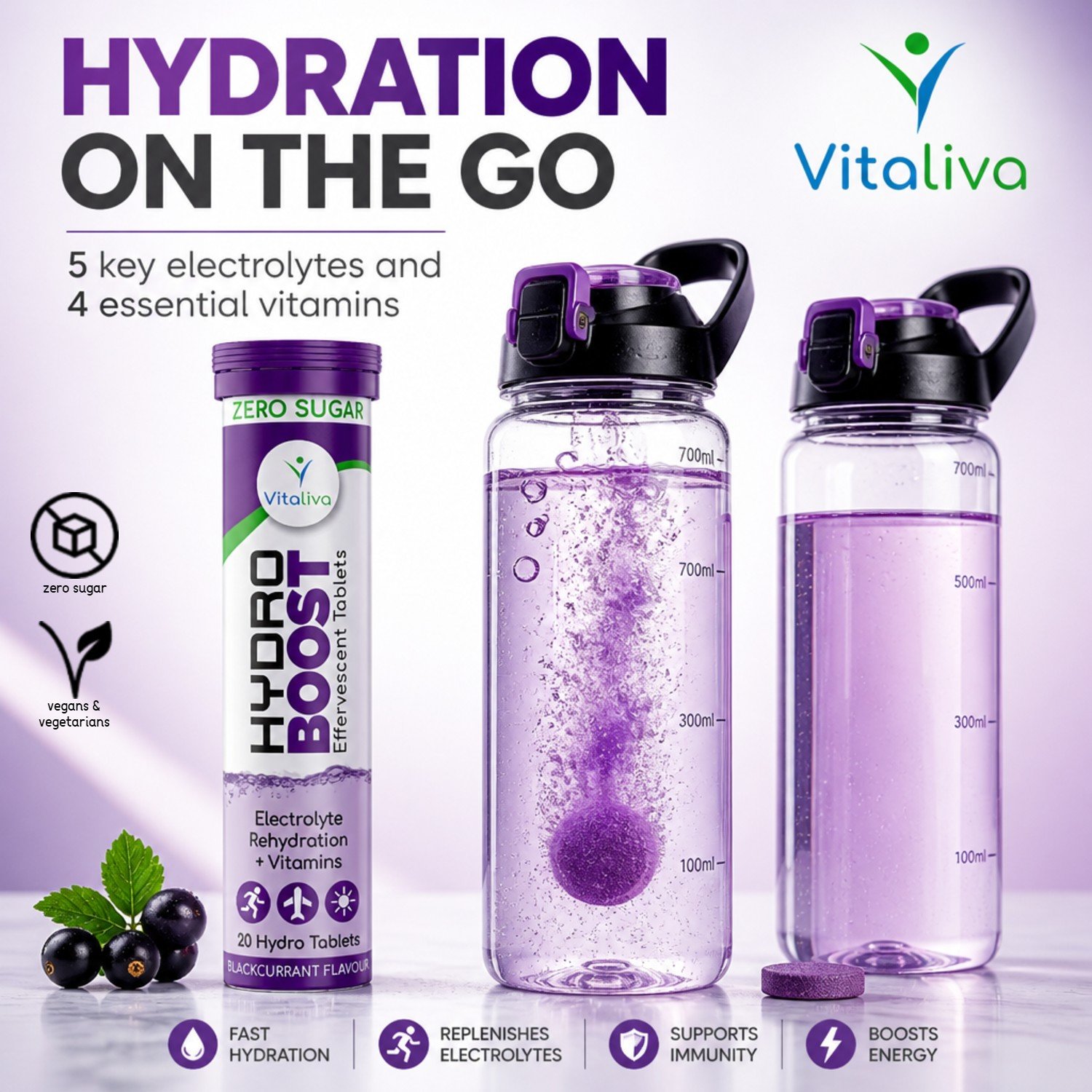
They are sugar-free, vegan, gluten-free and keto-friendly, with no artificial colours, flavours or preservatives. Drop one in water, let it fizz, and you have a measured electrolyte drink in seconds.
What to Look For in an Electrolyte Tablet
A good electrolyte tablet should list its electrolytes clearly, avoid unnecessary sugar, and dissolve cleanly into water. Look for sodium, potassium, magnesium and calcium on the label, and check whether added vitamins are included.
Sugar-free matters if you are watching your intake or following a keto diet. Vegan and gluten-free labelling matters if those are non-negotiables for you. Finally, taste decides whether you will actually use it, so pick a flavour you will look forward to drinking.
When to Speak to a Healthcare Professional
Speak to a healthcare professional if you have persistent cramps, ongoing fatigue, heart palpitations, confusion, or symptoms that do not improve with better hydration. These can point to something that needs proper assessment.
If you have a heart condition, kidney condition, or take medication that affects fluid or electrolyte balance, check with your doctor before significantly changing your intake. The same applies if you are pregnant, or managing a chronic illness.
For most healthy active adults, tuning your daily electrolyte intake is a matter of paying attention to how you sweat and how you feel. When in doubt, professional advice is the safer route.
Getting your hydration right is one of the simplest wins in training, yet it is the one most people leave to chance. At Vitaliva, we make it easy to stay on top of it with Hydro Boost: a zero-sugar, effervescent tablet that delivers sodium, potassium, calcium and magnesium, plus B vitamins, vitamin C and zinc, in a formula that is vegan, gluten-free and keto-friendly. Add to cart and keep a tube in your gym bag, your desk drawer and your travel kit, so a balanced electrolyte drink is always within reach.
Frequently Asked Questions
How many electrolytes should an active adult have each day?
Most active adults need roughly 1,500 to 2,300 mg of sodium daily, with higher amounts on heavy sweat days. Potassium targets sit around 3,500 mg, magnesium around 300 to 400 mg, and calcium around 700 mg. These are general starting points, not prescriptions. Your sweat rate, training volume, climate and diet all shift the numbers, so treat them as a baseline to adjust from rather than a fixed rule.
Do active adults need electrolytes every day?
Not always. If you train for under an hour in mild conditions and eat a varied diet, food usually covers your electrolyte intake. Daily supplementation makes more sense if you sweat heavily, train most days, follow a keto or low-carb diet, or live and work in hot conditions. A simple test: weigh yourself before and after a session. Losing over 1 kg of body weight suggests meaningful fluid and sodium loss worth replacing.
Is water enough for a workout, or do you need electrolytes?
For sessions under about 60 minutes at moderate intensity, water is usually enough. Beyond that, or in heat, plain water dilutes the sodium already in your body and can leave you feeling flat or headachy. This is the core of the water vs electrolyte drinks question: water replaces volume, electrolyte drinks replace volume and the minerals lost through sweat. Match the drink to the session, not to habit.
Which electrolytes are lost through sweat?
Sodium is the dominant electrolyte in sweat, followed by chloride and potassium, with smaller amounts of magnesium and calcium. Sodium loss varies widely between individuals, which is why some people finish a run with visible salt streaks on their kit and others do not. That visible salt is a useful clue that your electrolyte replacement after sweating needs to be more aggressive than a plain glass of water.
Can you have too many electrolytes?
Yes. Excess sodium raises blood pressure over time, and very high potassium intake can be dangerous for anyone with kidney problems. Symptoms of overload include swelling, persistent thirst and, in severe cases, nausea or irregular heartbeat. Stick to sensible ranges, spread intake across the day, and avoid stacking multiple supplements. If you have a kidney or heart condition, check with your GP before adding any electrolyte product.
Are electrolyte tablets suitable for daily use?
Yes, for most healthy active adults. Effervescent tablets are convenient because they deliver a measured dose in a fixed volume of water, so you always know what you are getting. Look for a sugar-free formula with sodium, potassium, magnesium and calcium, plus added vitamins. If you take medication for blood pressure, heart or kidney conditions, speak to your GP first, since sodium and potassium both interact with common prescriptions.
How do you know if you need to replace electrolytes?
Watch for muscle cramps, a dull headache, fatigue that feels different from normal training tiredness, dizziness on standing, or dark yellow urine. Salt streaks on clothing after a session are another clear signal. These are the common signs of electrolyte imbalance, and they usually appear alongside dehydration rather than on their own. If symptoms persist after rehydrating, seek medical advice rather than adding more supplements.