

Gluten Free Electrolyte Drink Mix: What to Check
Table of Contents
- Gluten Free Electrolyte Drink Mix: What Actually Matters
- How to Check Supplement Labels for Gluten
- Electrolyte Drinks for Coeliac Disease: What to Look For
- Sugar-Free Electrolyte Drink Mix: Why It Suits More Diets
- Keto Electrolyte Drink: Matching Carbs to Your Macros
- Tablets or Powder? Choosing the Right Format
- Common Mistakes When Buying Gluten Free Electrolytes
- Conclusion
- Frequently Asked Questions
Last Updated: 15 October 2026
Gluten Free Electrolyte Drink Mix: What Actually Matters
A gluten free electrolyte drink mix is a powdered or tablet hydration product formulated without wheat, barley, rye or oats, and made in a facility that avoids gluten-containing ingredients altogether. For anyone with coeliac disease, the distinction between "no gluten ingredients" and "no risk of cross-contamination" is the whole ballgame. This guide from Vitaliva walks through how to read a label properly, what the 14 regulated allergens actually cover, and why sugar-free, keto-friendly formulas suit more diets than the marketing copy suggests. Below, we'll show you exactly what to check before you buy, and the mistakes that catch most people out.
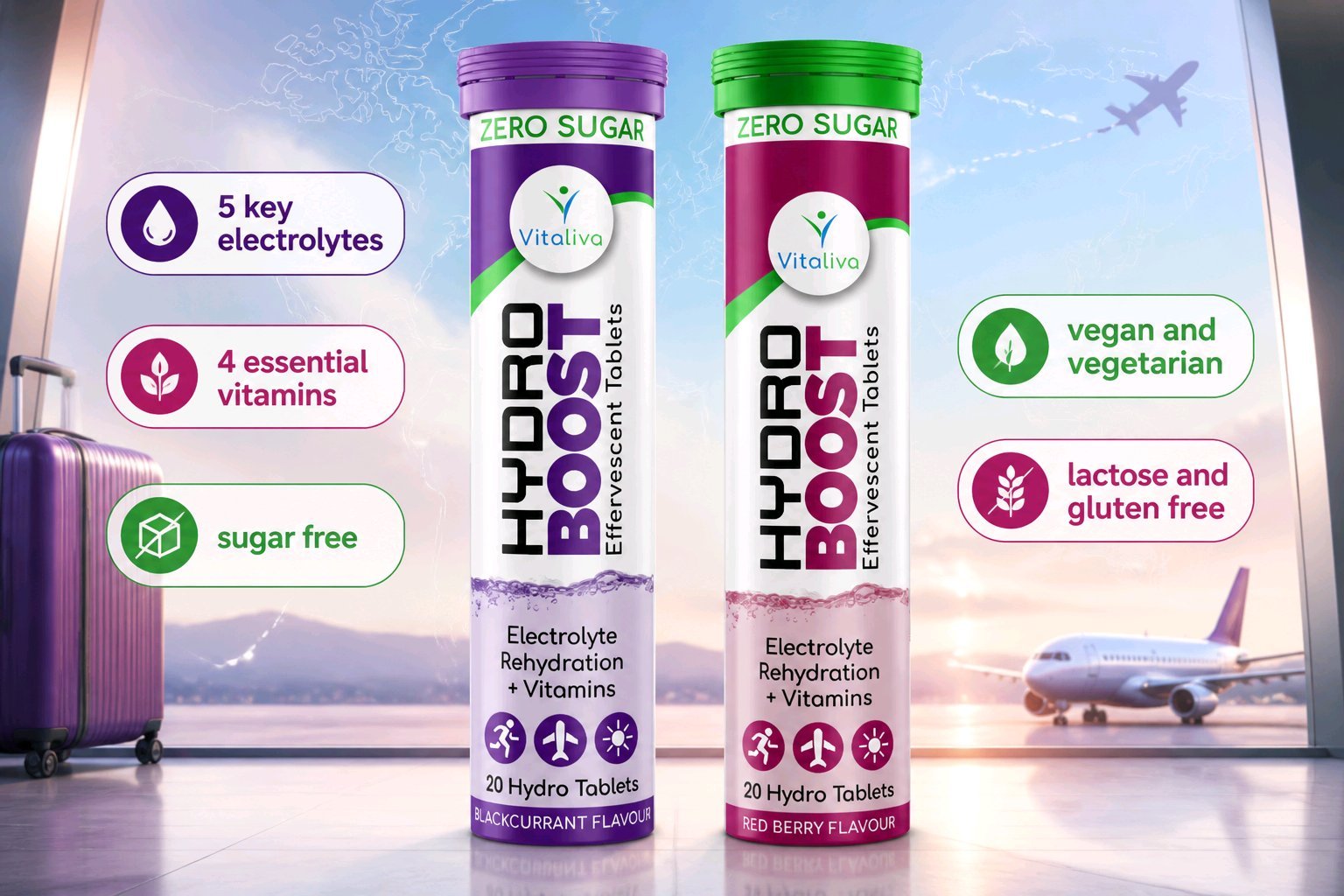
The stakes are higher than a bad-tasting drink. Gluten is one of the 14 allergens that must be emphasised on food labels under UK food information rules, and the NHS guidance on coeliac disease and gluten is clear that even trace amounts can trigger symptoms in people with the condition. That is why we formulate Hydro Boost around a manufacturing process that does not use gluten or lactose based ingredients at all, removing the cross-contamination risk at source rather than testing for it afterwards.
How to Check Supplement Labels for Gluten
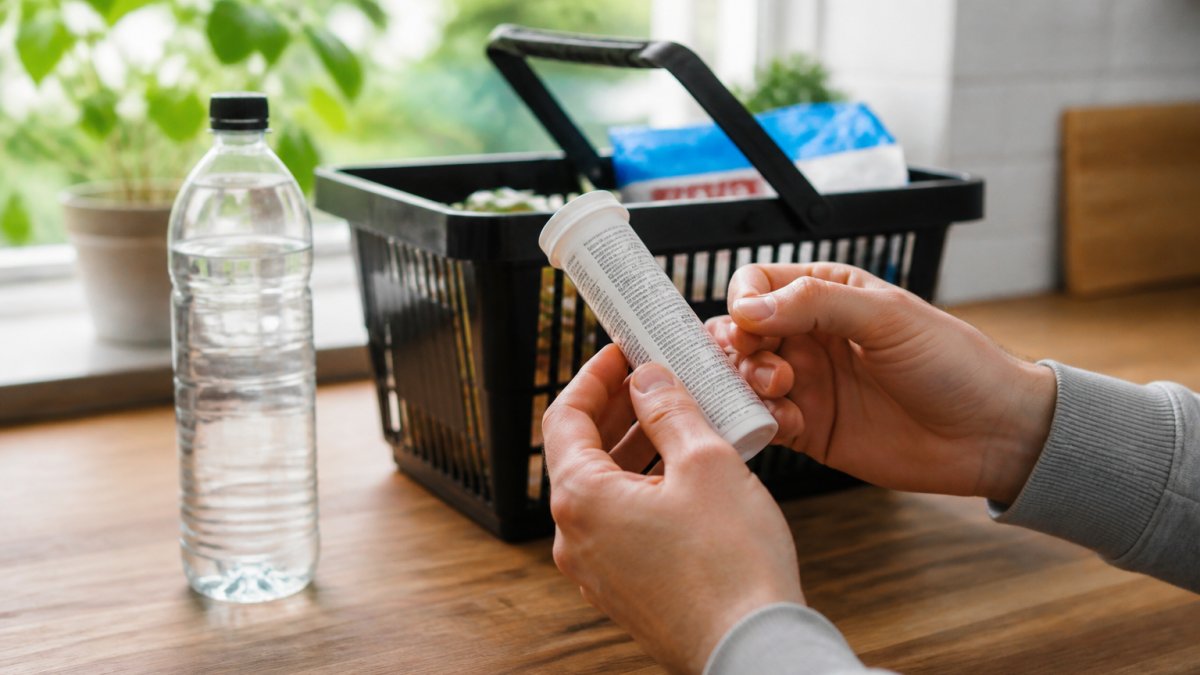
Checking a supplement label for gluten means reading the ingredients panel and the allergen statement, not the front of the pack. Marketing copy is written to sell; the ingredients panel is regulated. Start with the bolded allergen text, then work backwards through the full ingredient list.
The 14 Allergens and What 'May Contain' Really Means
UK food law requires 14 allergens to be flagged on packaging: celery, cereals containing gluten, crustaceans, eggs, fish, lupin, milk, molluscs, mustard, peanuts, sesame, soybeans, sulphur dioxide and tree nuts. Cereals containing gluten covers wheat, rye, barley and oats. If none of those appear in the ingredients, the product itself contains no gluten.
"May contain" is a different statement. It is a voluntary advisory warning, not a legal requirement, and it signals that a manufacturer cannot rule out cross-contact on the production line. A product with no gluten ingredients but a "may contain wheat" warning is a risk many coeliac buyers choose to avoid.
Marketing Claims vs the Ingredients Panel
"Gluten free" on the front of a pack is a claim. The ingredients panel is the evidence. A common mistake is trusting the headline and never turning the tube around. Look for three things: no gluten-containing cereals in the ingredients, no "may contain" warning for wheat or gluten, and a clear statement about the manufacturing environment.
Electrolyte Drinks for Coeliac Disease: What to Look For
Electrolyte drinks for coeliac disease need to clear three hurdles: no gluten ingredients, no cross-contamination risk, and a formula that replaces what sweating actually loses. Sodium, potassium, calcium and magnesium are the core four. Everything else is optional.
Since the pandemic, consumers have become far more aware of unnecessary excipients in supplements, and the industry has shifted to meet that. Fewer fillers, fewer artificial colours, fewer mystery ingredients. For coeliac buyers specifically, a shorter ingredient list is easier to verify.
As a pharmacist, one of the most common questions I answer daily is whether supplements or medication contain gluten, lactose, artificial dyes or other excipients.
The Coeliac UK guidance on reading food labels recommends checking every product individually rather than assuming a category is safe. Electrolyte powders are no exception, because binders and flavour carriers can vary between flavours of the same brand.
Sugar-Free Electrolyte Drink Mix: Why It Suits More Diets
A sugar-free electrolyte drink mix replaces sugar with sweeteners or removes sweetness entirely, which matters for anyone managing blood sugar, watching calories, or simply wanting hydration without a sugar spike. Sugar also slows down how quickly a drink empties from the stomach, which is the opposite of what you want during rapid rehydration.
For keto dieters, sugar-free is not a preference, it is a requirement. A single sugary drink can undo a day of careful macro tracking. The same logic applies to anyone managing their intake for medical reasons. Zero sugar means the product fits more diets without modification.
Keto Electrolyte Drink: Matching Carbs to Your Macros
A keto electrolyte drink must deliver sodium, potassium and magnesium without pushing you out of ketosis. On a low-carb diet, the body excretes more sodium and water, so electrolyte needs actually rise rather than fall. This is the part most guides get wrong: they treat keto hydration as optional when it is closer to essential.
Hydro Boost Blackcurrant Flavour →
Carb content is the number to check. Some electrolyte products hide several grams of sugar or maltodextrin per serving, which adds up fast across a training week. Look for zero-sugar formulas with a clear carb count, and check that the sweetener used does not carry a glycaemic load. Maltodextrin is classed as a carbohydrate, but metabolically, it acts much like a simple sugar. Before jumping to conclusions, though, let me explain. If you look at the nutritional values on Hydro Boost, for example, carbohydrate is listed at just 0.5g. That tiny amount isn't there for energy—it’s simply a trace amount of maltodextrin acting as a binder or flavour carrier needed to press the tablet
Vitaliva's Hydro Boost is formulated as a keto-friendly supplement with no sugar, which means it slots into a low-carb plan without a calculation. The NHS overview of the ketogenic diet notes that low-carb diets require attention to fluid and electrolyte balance, which is exactly where a zero-sugar tablet earns its place.
Tablets or Powder? Choosing the Right Format
Tablets and powder deliver the same electrolytes. The difference is convenience, dosing control and how you carry them. Here is how the two formats compare on the things that actually affect daily use.
Factor |
Effervescent tablets |
Powder tub |
|---|---|---|
Portability |
Fits in a pocket or bag |
Needs a scoop and a tub |
Dosing accuracy |
One tablet, one serving |
Requires measuring |
Mess |
Drop and dissolve |
Scooping and spillage |
Travel |
Airline friendly |
Bulky, can leak, suspicious |
Cost per serving |
Higher upfront |
Lower per gram |
For frequent travellers and gym-goers, tablets win on practicality. Powder wins on cost if you are mixing large volumes at home. Neither format is better for gluten status, since that depends entirely on the formulation and the facility, not the shape of the product.
Common Mistakes When Buying Gluten Free Electrolytes
The biggest mistake is reading the marketing copy instead of the label. Here are the errors we see most often, and how to avoid each one.
- Trusting "natural" as a gluten claim. Natural says nothing about gluten. Check the allergen panel.
- Ignoring the "may contain" line. A trace-risk warning is a real signal for coeliac buyers.
- Assuming one flavour is safe because another is. Recipes differ between flavours of the same range.
- Overlooking hidden carbs in "keto-friendly" products. Verify the carb count per serving.
- Buying a format that does not fit your routine. A powder tub you never use is worse than a tablet you carry.
- Not asking about the manufacturing facility. Cross-contamination risk lives in the factory, not the recipe.
Conclusion
Finding a gluten free electrolyte drink mix that genuinely fits a coeliac, keto or vegan diet comes down to one habit: check the label, not the marketing copy. Read the allergen panel, question the "may contain" line, and ask how the product is made. Vitaliva makes that check simple. Hydro Boost is sugar-free, gluten-free, lactose-free, caffeine-free and made without artificial colours, preservatives or added flavours, in a facility that does not use gluten or lactose based ingredients at all. It is vegan, keto-friendly and built around sodium, potassium, calcium, magnesium, B vitamins, vitamin C and zinc.
Frequently Asked Questions
Are electrolyte drink mixes usually gluten-free?
Not automatically. Many are made from gluten-free ingredients, but cross-contamination during manufacturing is the real risk. Under UK labelling rules, any of the 14 named allergens, including cereals containing gluten, must be emphasised in the ingredients list. A product is only reliably gluten-free when the label says so and the facility avoids gluten-containing ingredients. Check the label rather than the marketing copy, and look for a clear 'gluten-free' statement alongside the ingredients panel.
How can I check whether an electrolyte drink mix is gluten-free?
Start with the ingredients panel, not the front of the pack. Look for the 14 allergens in bold or underlined, and check for a 'may contain' warning. If the product is made in a facility that also handles wheat, barley or rye, cross-contamination is possible. A gluten-free claim on the label should be backed by the ingredients list and manufacturing notes. The NHS advises people with coeliac disease to check labels carefully and avoid products where gluten status is unclear.
Can people with coeliac disease use electrolyte powders?
Yes, provided the product is genuinely gluten-free. Coeliac disease is an autoimmune condition, so even small traces of gluten can trigger symptoms. Choose electrolyte powders or tablets that carry a clear gluten-free claim and are made in a facility that does not handle gluten-containing ingredients. If you are unsure, contact the manufacturer directly and ask about their allergen controls. The NHS recommends a strict gluten-free diet for anyone with coeliac disease.
Are sugar-free electrolyte drink mixes suitable for a keto diet?
Sugar-free mixes are generally a better fit for keto because they add little to no carbohydrate to your daily total. However, some sugar-free products use sweeteners or bulking agents that contain carbs. Check the nutrition panel for total carbohydrates per serving and compare that to your macro allowance. A keto-friendly electrolyte drink should also supply sodium, potassium and magnesium, which are lost more quickly on a low-carb diet.
Ready to hydrate without the label anxiety? Get started with Vitaliva Hydro Boost and keep rapid rehydration within reach, wherever the day takes you.