

How to Choose Electrolyte Supplements: UK Guide 2026
Table of Contents
- What to Look For in an Electrolyte Supplement
- Electrolyte Tablets vs Powder: Which Format Suits You?
- How Much Sodium in an Electrolyte Drink?
- When to Take Electrolytes
- Matching Electrolyte Supplements to Your Diet and Lifestyle
- Making the Final Decision: A Step-by-Step Checklist
- Common Mistakes When Choosing Electrolyte Supplements
- Frequently Asked Questions
Last Updated: October 12, 2026
What to Look For in an Electrolyte Supplement
Learning how to choose electrolyte supplements comes down to one question: does the label match what your body actually loses through sweat? Most people buy on flavour and price, then wonder why cramps persist. At Vitaliva, we make zero-sugar effervescent tablets.
An electrolyte supplement is a product that replaces the charged minerals lost through sweat, urine and breathing, chiefly sodium, potassium, calcium and magnesium. Get that mineral profile wrong and you are simply drinking expensive flavoured water.
The Four Core Electrolytes (and Why Each Matters)
Sodium is the mineral you lose most in sweat, and it drives fluid balance and nerve signalling. Potassium supports muscle contraction and heart rhythm. Calcium contributes to muscle function and bone health, while magnesium plays a role in muscle relaxation and energy metabolism.
The balance between them matters more than any single mineral. A formula heavy on sodium with almost no potassium or magnesium addresses only part of what you lose. Check that all four appear on the label before anything else.
Ingredients to Avoid: Sugar, Artificial Additives, and Hidden Carbs
Sugar is the ingredient most worth scrutinising. Many sports drinks carry it as their main carbohydrate source, which suits long endurance events but works against anyone managing weight or blood sugar. If you follow a keto or low-carb diet, scan for dextrose, maltodextrin and glucose syrup, all of which add carbs quietly.
Then check the rest of the label. Artificial colours, sweeteners and preservatives are common in cheaper mixes. Our Hydro Boost tablets contain no artificial colours, flavours or preservatives, and they are sugar-free, lactose-free, gluten-free and suitable for vegans and vegetarians.
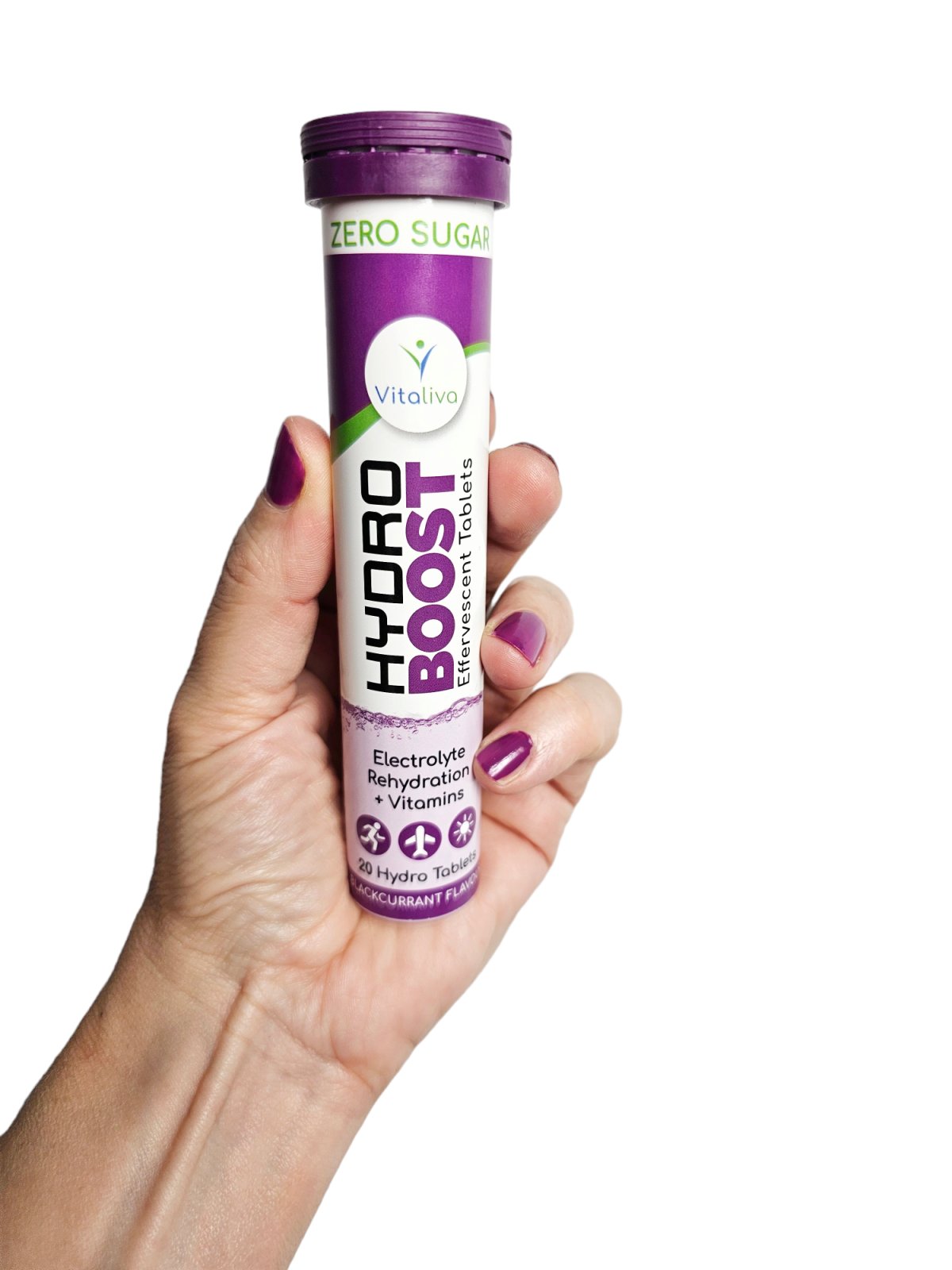
Hydro Boost Blackcurrant Flavour
Electrolyte Tablets vs Powder: Which Format Suits You?
The right format depends on where you will use it. Tablets and effervescent tubes win on portability, while tubs of powder win on cost per serving. Neither is universally better.
Powder makes sense if you mix large volumes at home or at a gym with a shaker always to hand. You get flexibility over strength, and the cost per serving tends to be lower because you are not paying for individual packaging.
Tablets suit travel, a gym bag or a desk drawer. Drop one in any glass or bottle of water and it dissolves. There is no scoop, no powder spill and no need to carry a shaker. That convenience is exactly why we built Hydro Boost as effervescent tablets rather than a tub.
Format |
Best For |
Trade-Off |
|---|---|---|
Effervescent tablets |
Travel, gym bags, desk drawers |
Higher cost per serving |
Powder tub |
High-volume home use |
Needs a scoop and shaker |
How Much Sodium in an Electrolyte Drink?
There is no single correct figure, because sweat sodium losses vary widely between individuals. What matters is that the product states its sodium content clearly, so you can judge whether it fits your training load and climate. Often sodium is stated as salt, as per UK guidelines.
A person training hard in heat loses far more sodium than someone doing a gentle session in a cool gym. If you cramp regularly, that is a signal to look at sodium first. If you simply want everyday hydration support, a moderate level is usually enough.
Ignore vague claims such as "high in electrolytes" that never give a figure. A transparent label lists sodium, potassium, calcium and magnesium in measurable amounts. If a brand hides the numbers, move on.
When to Take Electrolytes
Timing is straightforward: take electrolytes when you are losing fluids faster than you replace them, and when plain water alone leaves you flat. That covers hard training, hot weather, long flights and illness with sweating or vomiting.
For workouts, many people find a tablet in water before or during a session helps. After training, replacing what you lost supports recovery. Frequent flyers often take electrolytes during or after a flight, since cabin air is dry and dehydration contributes to headaches and fatigue.
For daily wellness, a single serving in the morning or early afternoon works well for most people. There is no benefit to drinking them constantly if you are not losing fluids.
Matching Electrolyte Supplements to Your Diet and Lifestyle
Your diet and daily routine decide which formula fits. Someone on a keto diet needs genuinely low-carb options, while a vegan needs plant-suitable ingredients and no animal-derived carriers.
Hydro Boost Blackcurrant Flavour →
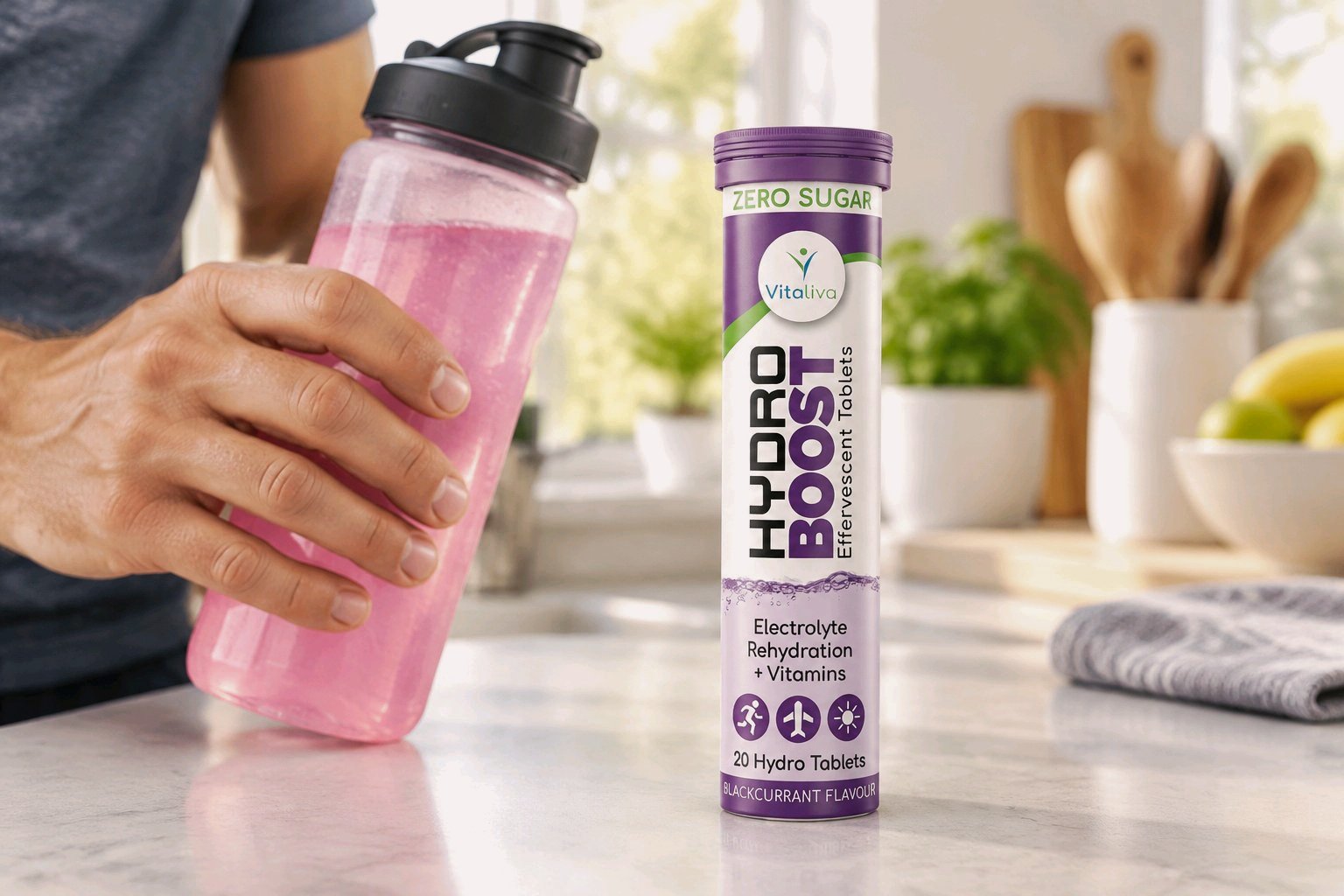
Work through the practical questions. Do you travel often, or train at home? Do you follow a restricted diet? Do you want a product you can carry in a pocket? The answers narrow the field fast.
Our Hydro Boost range is keto-friendly, vegan and gluten-free, with sodium, potassium, calcium and magnesium plus B vitamins, vitamin C and zinc too. It comes in Blackcurrant and Red Berry, both at £8.99. As a small company we’re thrilled to dispatch around 1,000 packs a week with 88% of customers rating us 4 stars or better.
Making the Final Decision: A Step-by-Step Checklist
Use this checklist before you buy any electrolyte product. It takes two minutes and prevents most bad purchases.
- Confirm the label lists sodium, potassium, calcium and magnesium with figures
- Check for sugar, maltodextrin, dextrose or glucose syrup if you are low-carb
- Confirm it fits your diet: vegan, gluten-free, lactose-free, keto-friendly
- Decide your format: tablets for portability, powder for volume
- Match the product to your main use: training, travel or daily hydration
- Check the cost per serving against how often you will actually use it
- Look for artificial colours, flavours and preservatives, and avoid them if you prefer clean labels
If a product clears all seven, it is worth trying. If it fails two or more, keep looking.
Common Mistakes When Choosing Electrolyte Supplements
The most common mistake is buying on flavour alone. Taste matters, but a product that tastes good and contains almost no sodium will not stop cramps or headaches.
A second mistake is assuming all electrolyte products work the same way. Some are essentially sugary soft drinks with a mineral blend. Others, including ours, are sugar-free and built around a full mineral profile.
The third is overbuying before you know what suits you. Start with one tube, use it through a normal training week, and judge from how you feel. NHS guidance on hydration and fluid intake is a sensible reference point for how much fluid most adults need daily.
If you want a product that states exactly what is in it, our Hydro Boost tablets are sugar-free, vegan and keto-friendly, with four key electrolytes plus vitamins B and C. Add to basket and give one tube a proper trial.
Frequently Asked Questions
What should I look for in an electrolyte supplement?
Look for sodium, potassium, magnesium, and calcium on the label. Check the sodium content per serving and whether it matches your activity level. Avoid added sugar, artificial colours, and unnecessary fillers. If you follow a keto, vegan, or gluten-free diet, verify the product suits your needs. A clear ingredient list with no hidden carbs is a good sign. Effervescent tablets like Hydro Boost dissolve quickly and are easy to carry, making them practical for daily use.
Which electrolytes should a supplement contain?
The four main electrolytes your body loses through sweat are sodium, potassium, magnesium, and calcium. Sodium helps your body absorb and retain water. Potassium supports muscle function and nerve signalling. Magnesium helps with muscle relaxation. Calcium plays a role in muscle contraction. A well-formulated supplement includes all four, plus vitamins that support energy and immunity.
How much sodium should an electrolyte supplement have?
For everyday hydration, 200-400mg of sodium per serving is a reasonable starting point. If you sweat heavily or exercise for more than an hour, you may need 500mg or more. The right amount depends on your activity level, climate, and how much you sweat. Check the label and compare it to what you lose during a typical workout. If you are unsure, start lower and adjust based on how you feel during and after exercise.
Are electrolyte tablets or powders better?
Tablets and powders both work well. Tablets are pre-measured, so you do not need to scoop or guess. They are also easier to carry in a gym bag or pocket. Powders can be cheaper per serving if you buy in bulk, but they require measuring and a tub takes up space. For convenience and consistent dosing, tablets often suit busy people better. For high-volume use, powder may be more economical. Choose based on your routine, not the format itself.
When should I take electrolytes during exercise?
For sessions under 60 minutes, water is usually enough. For longer or more intense workouts, take electrolytes before you start or sip them during exercise. If you sweat heavily, taking them 15-30 minutes before training can help. After exercise, electrolytes speed up rehydration and recovery. The key is not to wait until you feel cramps or a headache. Consistent intake during and after activity works better than trying to catch up later.
Can you take electrolyte supplements every day?
Yes, for most healthy adults, daily electrolyte supplements are safe when taken as directed. They are especially useful if you exercise regularly, live in a hot climate, or follow a low-carb diet. However, if you have kidney issues, high blood pressure, or take diuretics, speak to a GP before starting. The right daily amount depends on your diet and activity. A zero-sugar option helps you stay hydrated without adding unnecessary calories.
Choosing well takes a little label-reading, but the payoff is real: fewer cramps, fewer headaches and steadier energy through training and travel. At Vitaliva, we built Hydro Boost as a zero-sugar, effervescent tablet with sodium, potassium, calcium and magnesium, plus B vitamins, vitamin C and zinc, in a formula that is vegan, gluten-free and keto-friendly. Get started with Vitaliva and make your next session feel noticeably better hydrated.