

How to Rehydrate Quickly After a Workout: 7 Proven Steps
Table of Contents
- Why Water Alone Struggles to Rehydrate After Workout
- Signs of Dehydration After Exercise You Should Not Ignore
- How Much Water to Drink After Workout (and When)
- Best Electrolyte Drinks for Recovery: What to Look For
- Step-by-Step: How to Rehydrate Quickly After a Workout
- Common Rehydration Mistakes That Slow Recovery
- Conclusion
- Frequently Asked Questions
Last Updated: September 30, 2026
Why Water Alone Struggles to Rehydrate After Workout
Plain water is not the fastest way to rehydrate after workout sessions. It replaces lost fluid, but it does not replace the sodium and potassium your sweat carried away.
That matters more than most people realise. When you sweat, you lose water and electrolytes together. Drink water on its own and you top up the fluid but leave the salt gap. The result: you feel sloshy, still thirsty, and you are in the toilet every twenty minutes.
This guide from Vitaliva breaks down exactly how to rehydrate quickly after a workout, what to drink, how much, and when. Below, we cover seven proven steps, the signs of dehydration after exercise, and the mistakes that slow recovery.
What Sweat Takes Out of You
Sweat is not just water. It carries sodium, potassium, calcium and magnesium.
Sodium is the big one. It controls how much fluid your body holds and helps pull water into your cells. Potassium works alongside it to keep muscles firing properly. Lose too much of either and cramps, headaches and heavy legs follow.
The harder and longer you train, the more you lose. A hot gym session or a long run drains you far more than a light workout.
Why Sodium and Potassium Speed Up Absorption
Sodium and potassium help your gut absorb water faster. This is the science behind oral rehydration.
Water moves into your bloodstream through your intestinal wall. Sodium acts like a pump that pulls water across with it. Without sodium, some of that water just sits in your stomach.
Potassium supports muscle function and helps your cells hold onto the fluid once it arrives. Together, they get you back to normal quicker than water alone.
The NHS guidance on dehydration makes the same point: replacing lost salts matters, not just fluid.
Signs of Dehydration After Exercise You Should Not Ignore
The clearest signs of dehydration after exercise are thirst, dark yellow urine, headache, dizziness and muscle cramps. Catch them early and you fix them fast.
Watch for these signals:
- Dark urine - aim for pale straw colour
- Thirst that will not quit - even after drinking
- Headache - often the first real warning
- Muscle cramps - a classic low-sodium sign
- Dizziness or light-headedness on standing
- Dry mouth and lips
- Tiredness that feels heavier than the workout deserves
One quick check: weigh yourself before and after training. Every kilogram lost is roughly a litre of fluid you need to replace.
How Much Water to Drink After Workout (and When)
A good rule for how much water to drink after workout is 1.25 to 1.5 litres for every kilogram of body weight lost. This is the 150 percent rule.
Why 150 percent? You always lose some fluid through urine after drinking. Replacing 150 percent of your loss covers that gap.
Timing matters too:
- First 30 minutes: start sipping straight away
- Next 2 hours: drink steadily, not all at once
- Rest of the day: keep a bottle nearby and sip often
Sip, do not gulp. Small amounts absorb better.
The 150 Percent Rule Explained
The 150 percent rule is simple: replace 1.5 times the weight you lost during training.
Say you lost 1 kg. Drink about 1.5 litres over the next few hours. That extra half litre covers the fluid you will lose to urine.
If you did not weigh yourself, use thirst and urine colour as your guide. Drink until your urine runs pale and your thirst settles.
Hydro Boost Twin Pack Blackcurrant →
Best Electrolyte Drinks for Recovery: What to Look For
The best electrolyte drinks for recovery contain sodium, potassium, and little to no sugar. Sugar slows absorption when you have too much of it.
Here is what to check:
- Sodium - the key electrolyte for holding fluid
- Potassium - supports muscles and prevents cramps
- Magnesium and calcium - helpful extras for recovery
- Low or zero sugar - high sugar can pull water the wrong way
- No artificial colours or flavours - cleaner is better
Reading a Label in 30 Seconds
Flip the pack and scan three things: sodium, potassium, and sugar. Sodium will often be listed as salt.
If sodium is missing, it is basically flavoured water. If sugar is high, treat it as a sports drink for long endurance events, not everyday recovery.
Look for a short ingredient list you recognise. Fewer additives, better result.
Step-by-Step: How to Rehydrate Quickly After a Workout
Here is the seven-step routine to rehydrate after workout sessions fast and properly.
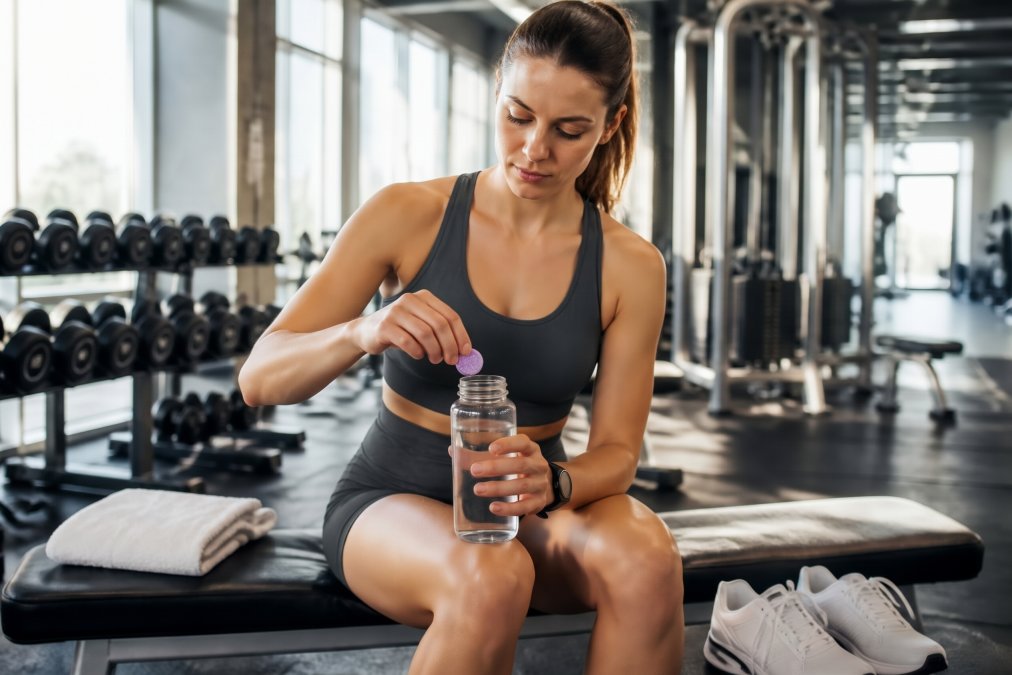
Gym essential.
- Cool down first. Spend 5 minutes walking and stretching so your heart rate drops.
- Weigh yourself if you can, to know your fluid loss.
- Start with electrolytes. Mix a hydro tablet in 500 ml of water.
- Sip over 30 minutes. Do not chug the whole bottle at once.
- Aim for 150 percent of your weight lost across the next few hours.
- Add a snack with some salt, like a banana or a handful of nuts.
- Keep sipping through the rest of the day, not just the first hour.
Follow the steps in order and you will feel sharper within an hour.
Step |
Action |
Timing |
|---|---|---|
1 |
Cool down and stretch |
5 minutes |
2 |
Weigh to gauge fluid loss |
Straight after |
3 |
Mix an electrolyte drink |
Within 30 minutes |
4 |
Sip steadily |
Over 30-60 minutes |
5 |
Replace 150 percent of loss |
Next 2-4 hours |
6 |
Add a salty snack |
With your drink |
7 |
Keep sipping all day |
Until urine is pale |
For a zero-sugar option, Vitaliva Hydro Boost delivers sodium, potassium, calcium and magnesium plus B vitamins, vitamin C and zinc. It is vegan, keto-friendly, gluten-free and lactose-free. One tablet in water and you are set.

Common Rehydration Mistakes That Slow Recovery
The biggest mistake is drinking plain water only, and it is more common than you would think.
Other habits that slow you down:
- Chugging a huge amount at once - your body cannot absorb it that fast
- Choosing high-sugar drinks - fine for marathons, poor for a gym session
- Skipping sodium - the single biggest fix most people miss
- Waiting hours to drink - start within 30 minutes
- Ignoring food - a salty snack helps you hold onto fluid
- Alcohol after training - it dehydrates you further
Fix these and your recovery speeds up almost overnight.
A common mistake is treating all sweat as equal. A cool-weather walk and a hot spin class are worlds apart. Match your fluid and electrolyte intake to how hard you actually worked.
Conclusion
Getting hydration right after training is one of the easiest wins in recovery, and most people still get it wrong. The fix is simple: replace fluid and electrolytes together, sip steadily, and start early.
Vitaliva makes that easy with Hydro Boost. Each tablet is sugar-free, keto-friendly, vegan and gluten-free, with sodium, potassium, calcium, magnesium, B vitamins, vitamin C and zinc for immune support. No scoops, no mess, just drop, dissolve and drink.
Get started with Hydro Boost and give your body the fast, clean rehydration it needs after every session.
Frequently Asked Questions
How much water should I drink after a 1-hour workout?
For every kilogram of body weight lost during exercise, aim to drink around 1.25 to 1.5 litres over the next two to four hours. Weigh yourself before and after a session to work out your sweat loss. A 1-hour workout in a warm gym can cost you 1 to 2 kg in sweat, so that is roughly 1.25 to 3 litres to replace. Spread it out rather than drinking it all at once, and add electrolytes if your sweat loss was heavy or your session was intense.
What are the best electrolytes for rapid rehydration?
Look for sodium as the lead electrolyte, supported by potassium, calcium and magnesium. Sodium is what pulls water into your cells quickly, so a drink with around 300 to 600 mg of sodium per serving works well for most post-workout needs. A tablet like Hydro Boost delivers sodium, potassium, calcium, magnesium, plus B vitamins, vitamin C and zinc, and it is sugar-free, vegan and keto-friendly. That combination supports faster rehydration than water alone while keeping the carb count at zero.
How do I know if I am fully rehydrated after exercise?
The simplest check is urine colour. Pale straw yellow means you are well hydrated; dark amber means you still need fluids. Other signs include no lingering headache, no muscle cramping, and feeling alert rather than foggy. You can also weigh yourself: if you are back within 1 percent of your pre-workout weight, you have replaced most of what you lost. Thirst is a useful cue but it lags behind actual need, so do not rely on it alone after hard sessions.
Can you drink too much water after a workout?
Yes. Drinking large volumes of plain water without electrolytes can dilute the sodium in your blood, a condition called hyponatraemia. Symptoms include nausea, confusion, headache and swelling in the hands or feet. It is rare but more common in endurance events where people drink litres of water over several hours. The fix is simple: include sodium in your rehydration plan, especially after long or very sweaty sessions, and sip steadily rather than gulping down huge amounts at once.