

Best Electrolyte Tablets for Long Flights: 2026 Guide
Table of Contents
- Why Electrolyte Tablets Beat Powders on Long Flights
- How to Stay Hydrated While Flying: A Practical Routine
- Preventing Jet Lag with Electrolytes
- What to Look for in Electrolyte Tablets for Air Travel
- How to Use Electrolyte Tablets During a Flight
- Common Mistakes to Avoid with Flight Hydration
- Conclusion
- Frequently Asked Questions
Last Updated: October 5, 2026
Why Electrolyte Tablets Beat Powders on Long Flights
If you have ever landed after a long-haul flight with a splitting headache and swollen ankles, you already know the problem. Cabin air is exceptionally dry, and you lose water simply by breathing for hours on end. The best electrolyte tablets for long flights solve this in a way powders cannot: they are compact, mess-free, and you can carry them through security without a second glance.
At Vitaliva, we have built our Hydro Boost range around exactly this scenario. A tablet goes into a 500ml bottle of water, dissolves in seconds, and you sip it steadily rather than gulping it down at the gate.

Powders have their place in the gym. On a plane, they are a liability. A scoop or sachet means loose powder in your hand luggage, and security staff treat unidentified white powder with understandable suspicion. Tablets remove that friction entirely.
How to Stay Hydrated While Flying: A Practical Routine
Learning how to stay hydrated while flying comes down to timing rather than volume. Drinking a litre in one go before boarding does not help; sipping steadily through the flight does.
Before You Board
Start early with an electrolyte tablet an hour before you leave for the airport, then buy a large bottle of still water once you are through security. Avoid the airport pint. Alcohol accelerates fluid loss, and the effects hit harder at altitude.
During the Flight
Add a tablet to 500ml of water, let it dissolve fully, and sip it across the flight rather than finishing it in one go. Repeat roughly every three to four hours on a long-haul route.
Stand and walk the aisle when the seatbelt sign allows. This keeps blood circulating and reduces swelling in the feet and ankles. Other small habits matter more than people expect:
- Remove your shoes once airborne and wear loose, comfortable clothing
- Use dry eye drops, since cabin air dries the eyes as well as the throat
- Skip excessive caffeine and alcohol, both of which work against you
- Keep a spare tube of electrolyte tablets in your hand luggage for the return leg
NHS guidance on dehydration and its symptoms
Preventing Jet Lag with Electrolytes
Preventing jet lag with electrolytes is not about a miracle cure. It is about removing one of the factors that makes jet lag worse. Dehydration amplifies fatigue, headaches, and the foggy feeling that follows a time-zone change.
When your body crosses several time zones, it is already under strain. Arriving dehydrated stacks a second problem on top of the first. Keeping your fluid and electrolyte balance steady during the flight gives your body one less thing to correct when you land.
That is why we built Hydro Boost around sodium, potassium, calcium, and magnesium alongside vitamins to aid recovery. These are the electrolytes your body loses through sweat and respiration, and replacing them supports steadier energy rather than the spike and crash of a sugary drink.
The goal is to arrive miles ahead of where you would be otherwise. Not perfectly adjusted, but not running on empty either.
What to Look for in Electrolyte Tablets for Air Travel
The right electrolyte tablets for air travel share a few characteristics. Look for a sugar-free formula, a short and readable ingredient list, and a tablet that dissolves cleanly in water.
Sugar is the first thing to check. Many sports drinks and powders rely on it for flavour, which is fine during intense exercise but less helpful when you are sitting still for eight hours. A zero-sugar tablet keeps the focus on rehydration.
Next, check the electrolyte profile. Sodium, potassium, calcium, and magnesium all play a role, and a product that lists only one or two is doing half the job.
Then consider how you will actually use it. Tablets that come in slim tubes pack easily into a jacket pocket or seat-back pouch. Tubs do not.
Hydro Boost Blackcurrant Flavour →
What to Check |
Why It Matters |
What to Avoid |
|---|---|---|
Sugar content |
Keeps focus on hydration, not a sugar spike |
High-sugar formulas for sedentary travel |
Electrolyte range |
Sodium, potassium, calcium, magnesium together |
Single-electrolyte products |
Dissolving quality |
Dissolves fully in 500ml |
Tablets that leave residue |
Packaging |
Slim tubes fit hand luggage easily |
Bulky tubs and loose sachets |
Dietary fit |
Vegan, gluten-free, keto-friendly options |
Unclear allergen labelling |
Food Standards Agency guidance on food supplements and labelling
How to Use Electrolyte Tablets During a Flight
Using electrolyte tablets during a flight takes under a minute. Drop one tablet into 500ml of water, wait for it to dissolve completely, and sip the solution regularly rather than drinking it all at once.
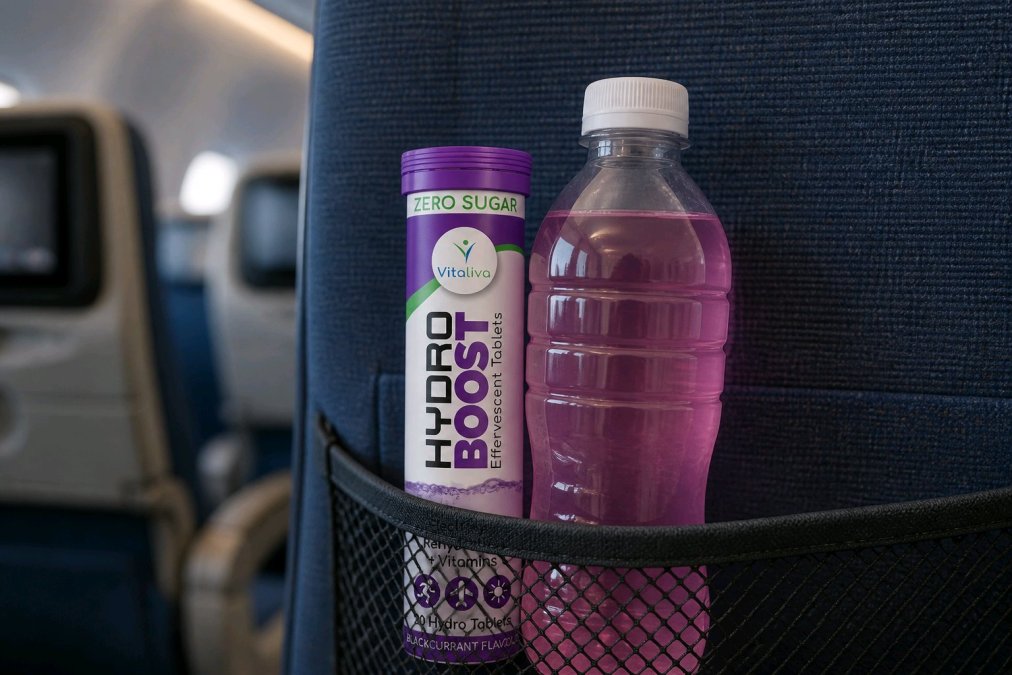
Buy your water after security, since sealed bottles from home will be confiscated. If you prefer, ask the cabin crew to fill your bottle and add the tablet yourself. Either way, the routine is the same: dissolve, sip, repeat.
Pair the tablet with the physical habits that keep circulation moving. Stand and walk about when you can, use dry eye drops, remove your footwear, and wear loose, comfortable clothing. Avoid excessive caffeine and alcohol for the duration of the flight.
For a long-haul route, one to two tablets across the journey is a sensible starting point. Adjust based on how you feel and how long you are in the air.
Common Mistakes to Avoid with Flight Hydration
The most common mistake is treating hydration as a single event rather than a habit. One big drink before boarding does not carry you through a nine-hour flight.
A second mistake is relying on tea, coffee, and alcohol as your fluid intake. All three work against you at altitude, and the cabin already dehydrates you faster than you would expect on the ground.
A third is ignoring the physical side entirely. Fluid balance is only half the picture. Standing, walking, and stretching keep your circulation working, and no tablet replaces that.
Finally, many travellers pack hydration products in checked luggage and then cannot reach them. Keep a tube in your hand luggage, or better, in your pocket.
Conclusion
Long flights ask a lot of your body, and arriving dehydrated makes the first day of any trip harder than it needs to be. Our Hydro Boost tablets are built for exactly this: a zero-sugar, vegan, gluten-free formula that dissolves in 500ml of water and slips into hand luggage without a second thought.
Each tablet delivers sodium, potassium, calcium, and magnesium alongside B vitamins, vitamin C, and zinc. Choose between Blackcurrant and Red Berry.

Add to basket and arrive miles ahead on your next flight.
Frequently Asked Questions
Why are electrolyte tablets better than powders for air travel?
Tablets are compact, pre-measured, and easy to carry in hand luggage. Powders can look suspicious at airport security and are messy to mix in a cramped seat. A tablet dissolves in 500ml of water with no scoop or shaker needed, so you can rehydrate discreetly and consistently throughout the flight.
How do electrolytes help with jet lag and flight fatigue?
Cabin air is very dry, and you lose water and electrolytes through breathing and sweat without noticing. Sodium, potassium, magnesium, and calcium support fluid balance and nerve function. When levels drop, you feel tired, headachy, and foggy. Replacing them during the flight helps you land feeling more alert and reduces the crash that makes jet lag worse.
Can I take electrolyte tablets through airport security?
Yes. Solid tablets are treated like any other non-liquid supplement and are not subject to the 100ml liquid rule. Keep them in their original tube or packaging so they are easy to identify. If you carry them in hand luggage, there is no need to declare them separately at security.
How much water should I drink with electrolyte tablets during a flight?
One tablet per 500ml of water is the standard mix. Aim for roughly 250ml of water per hour of flight, and use one tablet every two to three hours. On a long-haul flight, that means two to three tablets. Sip steadily rather than drinking a large amount at once, and avoid alcohol and excessive caffeine, which increase fluid loss.