
Table of Contents
- Why Travel Dehydrates You Faster Than You Think
- Signs of Dehydration During Travel You Should Not Ignore
- How to Avoid Dehydration on Long-Haul Flights
- The Benefits of Electrolytes for Travellers
- Step-by-Step: How to Stay Hydrated While Travelling on Any Trip
- Common Mistakes That Leave Travellers Dehydrated
- Choosing the Right Hydration Support for Your Trip
- Frequently Asked Questions
Last Updated: 27 September 2026
Why Travel Dehydrates You Faster Than You Think
Travel dehydrates you faster than everyday life because cabin air, dry climates, and broken routines all pull water from your body at once. This guide explains how to stay hydrated while travelling, step by step.
Cabin air on long-haul flights is notoriously dry. Add a busy airport, skipped meals, and extra coffee, and your fluid levels drop before you notice. That is why many travellers land with a headache, dry mouth and eyes, and heavy legs. The fix is not complicated, but it does need a plan.
Below, we break down the warning signs, the flight-day routine, and the packing list that keeps your hydration on track. Most of it takes less than five minutes to set up.
Signs of Dehydration During Travel You Should Not Ignore
The signs of dehydration during travel are easy to miss because they overlap with jet lag. Watch for dark urine, dry mouth and eyes, headaches, tiredness, and cramping in your legs or hands.
Other red flags include:
- Feeling thirsty well before you land
- Dizziness or light headedness when standing up
- Poor concentration or irritability
- Dry skin and cracked lips
- Constipation on the first day after arrival
- Pinch the skin on the back of your hand (skin turgor) and time how long it takes to flatten. The quicker it snaps back, the more hydrated you are
Thirst is a late signal, not an early one. By the time you feel it, you are already behind. Check your urine colour instead: pale straw is the goal, dark amber means drink more.
How to Avoid Dehydration on Long-Haul Flights
To avoid dehydration on long-haul flights, drink water before and during the flight, skip alcohol, and add electrolytes to replace what you lose through sweat and dry cabin air.
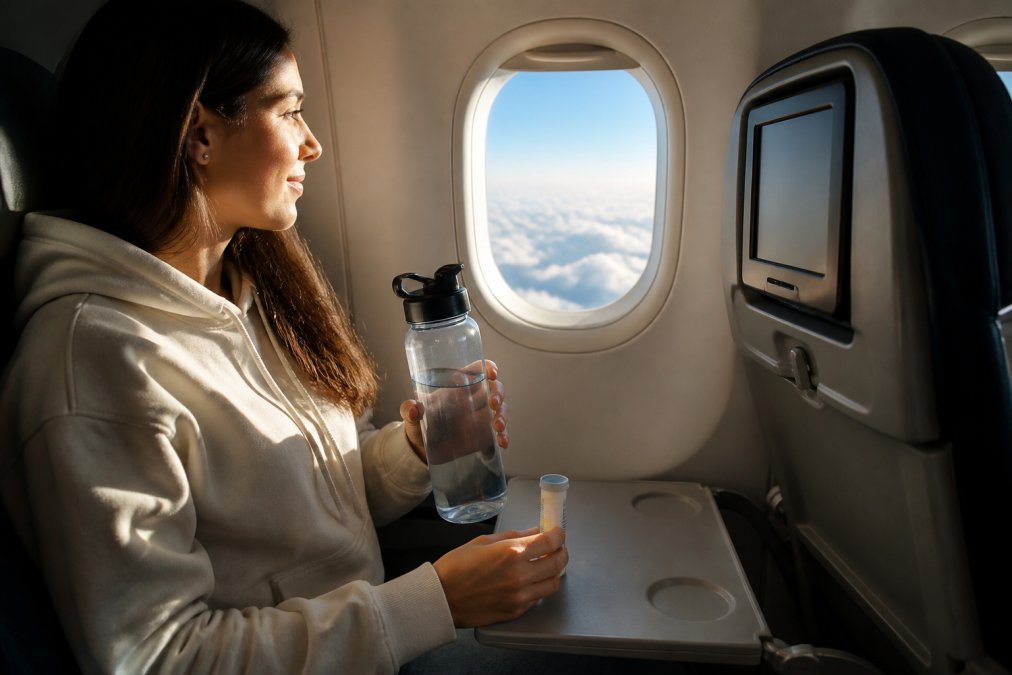
An empty water bottle can be taken through security and filled at any of the water filling stations airside in the airport.
Before You Board
Airport time counts. Most people arrive at the gate already behind on fluids.
- Drink 500ml of water in the hour before boarding
- Skip the pre-flight pint or glass of wine
- Skip your coffee fix from Pret or Starbucks
- Fill an empty bottle after security
- Eat something with salt, like olives or salted nuts
During the Flight
Set a simple rhythm and stick to it.
- Drink one glass of water for every hour in the air
- Add one electrolyte tablet to a bottle mid-flight
- Say no to alcohol and limit coffee to one cup
- Use lip balm and eye drops (such as hypromellose to manage dryness
- Get up and stretch every two hours
The Benefits of Electrolytes for Travellers
The benefits of electrolytes for travellers come down to one thing: water alone does not replace what you lose. Sodium, potassium, magnesium, and calcium carry fluid into your cells and help your muscles and nerves work properly.
When you sweat or sit in dry air for hours, you lose salts as well as water. Drinking plain water further dilutes what is left, which can leave you feeling flat. That is why many travellers find an electrolyte drink more refreshing than water on its own.
Vitaliva's Hydro Boost tablets are one option. Each tablet contains sodium, potassium, calcium, magnesium, plus B vitamins, vitamin C, and zinc. They are sugar-free, vegan, and keto-friendly, which matters if you track carbs or avoid animal products. At £8.99 for a twin pack, they are excellent value and easy to keep in a carry-on.

Hydro Boost Twin Pack Blackcurrant - in an easy to carry tube.
Step-by-Step: How to Stay Hydrated While Travelling on Any Trip
Follow these three steps before, during, and after your journey. They work for a weekend break or a two-week trip.
Step 1: Plan Your Water Access Before You Leave
Check where you can refill at each stage of the trip. Airports, train stations, and hotel gyms all have taps. Pack an empty bottle so you can fill it after security.
- Check if your hotel has a kettle or filtered water
- Note any long gaps between meals or stops
- Pack a bottle you can refill, not a single-use one
Step 2: Pack Electrolyte Tablets for Flights and Long Journeys
Electrolyte tablets are light, compact, and easy to use. Drop one in a bottle of water and wait for it to dissolve.
- Pack enough for one per travel day, plus one spare
- Keep them in your carry-on, not checked luggage
- Choose a flavour you actually like, or you will skip it
Step 3: Set Hydration Reminders and Track Your Intake
A reminder on your phone works better than willpower. Set an alarm every hour while travelling.
- Use a marked bottle so you can see how much you have drunk
- Aim for pale straw urine by the end of each travel day
- Add one electrolyte drink after any sweaty activity
Step |
What to Do |
When |
|---|---|---|
1 |
Plan refill points and pack a bottle |
Before you leave |
2 |
Pack electrolyte tablets |
Before you leave |
3 |
Set hourly reminders and track intake |
Throughout the trip |
Common Mistakes That Leave Travellers Dehydrated
The biggest mistake is relying on thirst alone. Other common errors include drinking only at meals, skipping electrolytes, and counting coffee or alcohol as fluids.
Watch out for these:
- Drinking a large amount at once instead of sipping through the day
- Forgetting to drink on short flights because "it's only two hours"
- Choosing sugary sports drinks that add calories without much benefit
- Leaving your water bottle in checked luggage
A common mistake is buying a big bottle at the airport and finishing it in one go. Sip steadily instead. Your body absorbs fluid better in small, regular amounts.
Choosing the Right Hydration Support for Your Trip
Choosing hydration support comes down to three things: what is in it, how easy it is to carry, and whether you will actually use it.
Look for a product that lists its electrolytes clearly. Sodium and potassium are the two most important for travel. Magnesium helps with cramping, and calcium supports muscle function. If you follow a keto, vegan, or gluten-free diet, check the label for those claims before you buy.
Vitaliva's Hydro Boost tablets are designed for exactly this. They are sugar-free, lactose-free, gluten-free, and suitable for vegans and vegetarians. Each tablet dissolves in water in less than a minute, so you can use them on a plane, in a hotel room, or at the gym. The twin pack holds 40 tablets for £8.99.
If you want a simple, portable option that fits in a carry-on, Hydro Boost is worth trying. NHS advice on dehydration is a useful reference for spotting the warning signs early.
Frequently Asked Questions
Why is it harder to stay hydrated when travelling?
Travel disrupts your normal hydration habits. Cabin air on flights has very low humidity, which increases fluid loss through breathing and skin. You may also drink less because of limited access to water, altered routines, and avoiding toilet queues. Alcohol and caffeine on board make it worse. Add warmer climates or higher altitudes at your destination, and your body loses water faster than usual while your thirst signals lag behind.
Are electrolyte tablets better than plain water for travel?
Plain water rehydrates, but it does not replace the sodium, potassium, calcium and magnesium you lose through sweat and urine. Electrolyte tablets dissolve in water and help your body absorb fluid more effectively, which matters on long flights or after intense activity. Zero-sugar options like Hydro Boost also include B vitamins, vitamin C and zinc. They are not a replacement for drinking water, but they make each glass work harder.
What are the signs of dehydration during travel?
Watch for headaches, dark yellow urine, dry mouth, tiredness, dizziness, and muscle cramps. On flights, swollen ankles and dry skin are also common. These signs often appear before you feel properly thirsty, so treat them as early warnings. If you notice any of them, drink water and take an electrolyte tablet rather than waiting until you feel worse.
How do I maintain electrolyte balance while on holiday?
Start each day with a glass of water and an electrolyte tablet, especially if you are walking a lot or spending time in the heat. Eat foods rich in potassium and magnesium, such as bananas, leafy greens and nuts. Limit alcohol, which increases fluid loss. Keep a small tube of tablets in your day bag so you can top up wherever you are. A twin pack of 40 tablets costs £8.99 and lasts most trips.
Travel throws your routine out the window, and hydration is usually the first thing to slip. A bottle, a tube of electrolyte tablets, and an hourly reminder solve most of it. Vitaliva's Hydro Boost tablets are sugar-free, vegan, and keto-friendly, with sodium, potassium, calcium, magnesium, and vitamins B and C in every tablet. Add a twin pack to your carry-on and keep your energy steady from take-off to touchdown.