

Best Value Electrolyte Tablets UK 2026: Buying Guide
Table of Contents
- Why Electrolyte Tablets Are the Smart Choice for Hydration in 2026
- What to Look for in Electrolyte Tablets
- Electrolyte Tablets vs Powders: Which Offers Better Value?
- Are Zero-Sugar Electrolyte Tablets Effective?
- Electrolyte Tablets for Running and Endurance Training
- How to Get the Best Value from Electrolyte Tablets
- Frequently Asked Questions
Last updated: 14 October 2026
Why Electrolyte Tablets Are the Smart Choice for Hydration in 2026
Electrolyte tablets are compact, pre-measured supplements that dissolve in water to replace the sodium, potassium, calcium and magnesium lost through sweat. For anyone juggling training, travel and a full schedule, they offer a practical middle ground between plain water and bulky powder tubs.
This guide from Vitaliva covers what separates a genuinely good-value electrolyte tablet from a cheap one that sits unused in a cupboard. We sell them, so treat our bias as declared, but the selection criteria below apply to any brand you compare. As a pharmaceutical chemist, my perspective naturally leans heavily toward ingredient formulas and overall formulation. But as a triathlete and climber, I’m also on the receiving end of these electrolytes just like you.
The case for tablets is simple. They are portable, they do not need scooping or measuring, and a tube survives being thrown in a gym bag or a carry-on. Below, we break down exactly what to check on a label, how tablets compare with powders on cost per serving, and how to get the most from every tube. The short answer on the best value electrolyte tablets in the UK: it rarely comes down to the lowest headline price.
What to Look for in Electrolyte Tablets
The best electrolyte tablet is one that replaces the minerals you actually lose in sweat, at a cost per serving you will happily pay every day. Four electrolytes do the heavy lifting: sodium, potassium, calcium and magnesium. If a label leads with flavour and vitamins but skimps on these, put it back. Flavour is subjective and vitamins are secondary.
Three checks matter more than anything else on the packaging:
- Electrolyte content: all four minerals present, with sodium as the lead ingredient
- Sugar and sweeteners: zero sugar if you are keto, diabetic or simply watching intake
- Dissolve quality: a tablet that leaves grit or needs vigorous stirring will not get used
A common mistake is assuming a higher price means a stronger formula or ‘high strength’ better at rehydration. One might question what ‘high strength’ is being referred to. Pricey products often means prettier packaging. Read the ingredient panel before the marketing copy.
Ingredient Checklist: What a Quality Tablet Contains
Sodium, potassium, calcium and magnesium should all appear, alongside vitamins that support energy and immunity. Vitamin C and the B group are the usual additions, and zinc is a sensible extra for immune support. Our own Hydro Boost formula covers all four electrolytes plus B vitamins, vitamin C and zinc.
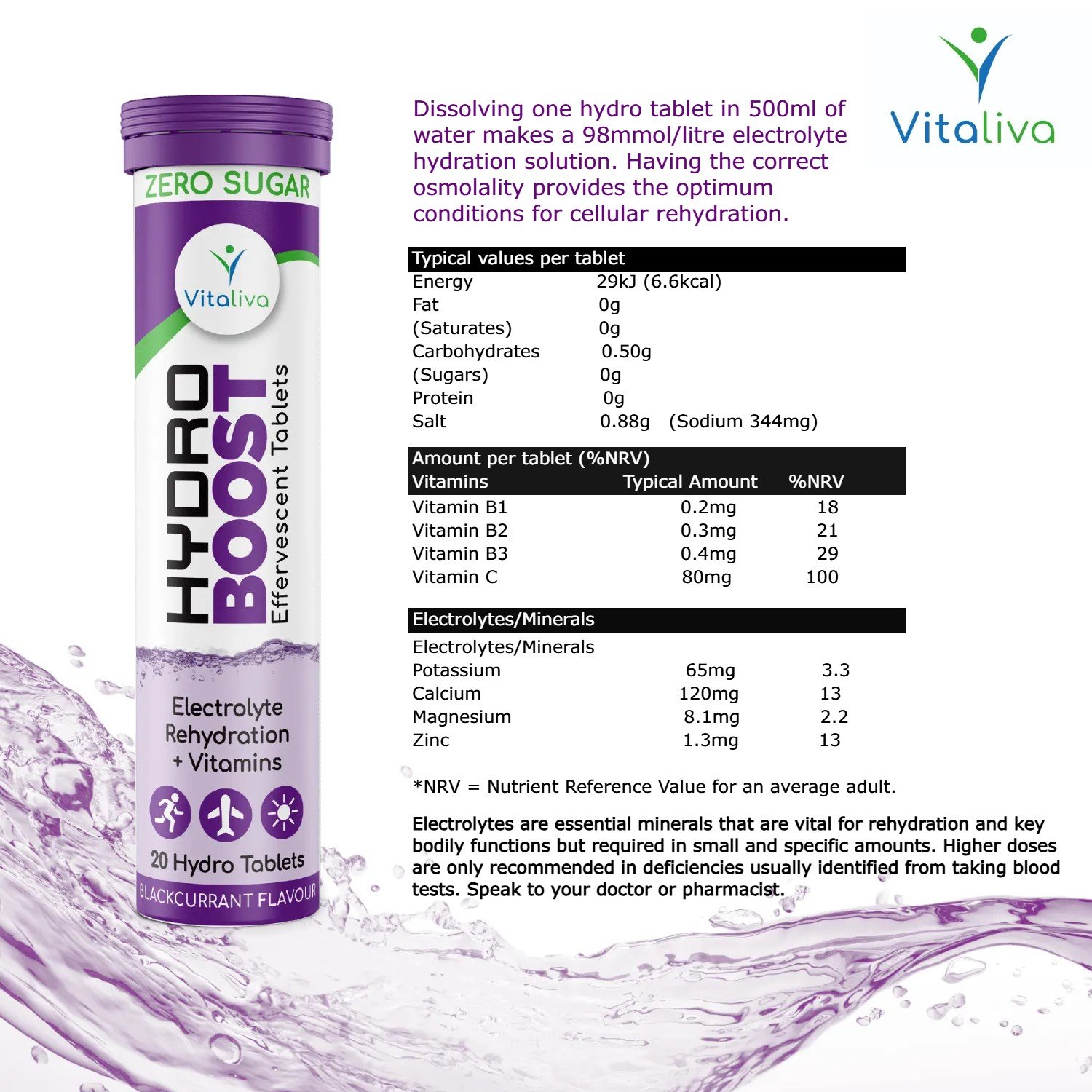
A unique blend of electrolytes and vitamins. By dissolving one hydro tab in 500ml of water gives an electrolyte hydration solution of optimal concentration.
Sugar, Additives and Diet Compatibility
Sugar-free matters more than most shoppers realise. Sugary electrolyte drinks can work against you if your goal is steady energy rather than a spike and crash. For anyone following a keto or low-carb diet, hidden sugars and maltodextrin can quietly break the plan.
Since the COVID-19 pandemic, consumers have become far more conscious of what goes into their supplements. Naturally, the industry has shifted to meet this demand for transparency and quality.
Check for these before buying:
- Sugar and caffeine free
- No artificial colours, flavours or preservatives
- Vegan and vegetarian suitability if that matters to you
- Gluten-free and lactose-free if you have sensitivities
Maltodextrin is classed as a carbohydrate, but metabolically, it acts much like a simple sugar. Before jumping to conclusions, though, let me explain. If you look at the nutritional values on Hydro Boost, for example, carbohydrate is listed at just 0.5g. That tiny amount isn't there for energy—it’s simply a trace amount of maltodextrin acting as a binder or flavour carrier needed to press the tablet.
Electrolyte Tablets vs Powders: Which Offers Better Value?
Powders are cheaper per gram. Tablets are cheaper per usable serving. That gap is where the real value question lives.
A large tub of powder looks economical—until you weigh the scoop, spill half of it on the kitchen counter, and find it clumping after a few weeks in humid air. That applies to almost any powdered supplement, whether it’s collagen or creatine. Tablets, on the other hand, are individually dosed, sealed in a tube, and stay fresh far longer. Hydro Boost even includes a desiccant inside the lid to lock moisture out. You’re paying a small premium, but what you gain is precision, convenience, and a far longer shelf life.
Factor |
Tablets |
Powders |
|---|---|---|
Portability |
Tube fits in a bag or pocket |
Tub stays at home |
Dosing accuracy |
Fixed per tablet |
Depends on your scoop |
Shelf life after opening |
Sealed until used |
Can clump in humidity |
Cost per serving |
Higher upfront, no waste |
Lower upfront, easy to overuse |
Best for |
Travel, gym, office |
High-volume daily use at home |
If you train hard at home every day and go through powder quickly, powder wins on cost. If you travel, commute, or want a tube in your desk drawer, tablets win on the only metric that matters: whether you actually use them.
Are Zero-Sugar Electrolyte Tablets Effective?
Yes. Sugar is not what rehydrates you. Sodium and water are. A zero-sugar tablet delivers the electrolytes your body needs without the calories or the blood-sugar spike, and it is the better choice for keto dieters, diabetics and anyone managing weight.
The confusion comes from sports drinks marketing, which ties sugar to performance. For short efforts, that is not the whole picture. For everyday hydration, travel and moderate training, a sugar-free tablet does the job cleanly.
Hydro Boost Blackcurrant Flavour →
What most guides miss is the taste factor. A zero-sugar tablet lives or dies on flavour—if it leaves a chalky, artificial, or metallic aftertaste, you simply won't drink enough of it. That’s why we poured real effort into the taste profile of both Hydro Boost flavours, and it’s the number one thing customers praise in our reviews. Of course, taste is always subjective, but getting the balance right was non-negotiable for us.
Electrolyte Tablets for Running and Endurance Training
For runs under an hour, water is usually enough. Past that, or in heat, replacing sodium and potassium becomes the difference between finishing strong and hitting a wall. Electrolyte tablets for running are best used before you feel thirsty, not after cramps set in.
Practical timing for a training week:
- Before: one tablet in 500ml about 30 minutes before a long run
- During: sip a second bottle on runs over 90 minutes
- After: one tablet within an hour to support recovery
Cramp prevention is not instant. Tablets support hydration and mineral balance over time, so consistency across the week matters more than a single dose on race day.
How to Get the Best Value from Electrolyte Tablets
The best value electrolyte tablets in the UK are not the lowest price per tube. They are the lowest cost per serving you will genuinely finish. A cheap tablet you abandon after two glasses is the most expensive option on the shelf.
A simple way to judge it:
- Divide the tube price by the number of tablets to get cost per serving
- Check the tablet count, not just the tub size
- Confirm it is sugar-free so you are not paying for filler
- Read reviews for taste, since taste drives whether you keep using it
- Buy a twin pack if you use them daily, which usually lowers the per-serving cost
Our Hydro Boost tablets come in Blackcurrant and Red Berry, both zero sugar, vegan, gluten-free and lactose-free, with four key electrolytes plus B vitamins and vitamin C. Customers like Sandra call them "very good to rehydrate yourself" at a "very reasonable price", and Helen C notes that drinking a flavoured tablet is "easier than just plain water". Both purchased on Amazon.

That last point is the one people underestimate. Hydration only works if you drink enough, and flavour is what makes you reach for the bottle.
Frequently Asked Questions
What should I look for in electrolyte tablets?
Check for sodium, potassium, calcium and magnesium on the ingredient list, as these four electrolytes cover the main minerals lost through sweat. Look for added B vitamins and vitamin C for energy and immune support. Avoid tablets with artificial colours, flavours or preservatives. If you follow a vegan, keto or gluten-free diet, confirm the product states it is suitable. A clear label with no hidden sugars or fillers is a good sign of quality.
Are zero-sugar electrolyte tablets effective?
Yes. The electrolytes themselves, sodium, potassium, calcium and magnesium, do the work of rehydration. Sugar is not required for electrolyte absorption in everyday hydration. Zero-sugar tablets suit keto dieters and anyone watching their intake, and they avoid the energy spikes and crashes that sugary drinks can cause. Many people find they feel just as refreshed after a zero-sugar tablet as after a sugary sports drink.
How do electrolyte tablets compare with powders and drinks?
Tablets are pre-measured, so there is no scooping or guessing. They are lighter and more portable than tubs of powder, which matters if you travel or train away from home. Powders can cost less per serving in large tubs, but they are messier and less convenient. Ready-made drinks are the most convenient but usually the most expensive per serving and often contain sugar. Tablets sit in the middle: convenient, consistent and easy to carry.
Can vegans take electrolyte tablets?
Many electrolyte tablets are suitable for vegans, but you need to check the label. Some products use gelatin or other animal-derived ingredients in the coating or formulation. Look for tablets explicitly marked as vegan or vegetarian. Vitaliva Hydro Boost is suitable for vegans and vegetarians, and is also sugar-free, lactose-free, gluten-free and keto-friendly. Always read the allergen and diet information on the packaging before buying.
Getting hydration right is not complicated, but it does require a product you will stick with. If you want a zero-sugar tablet with four key electrolytes, essential vitamins and a taste that makes daily hydration easy, try Vitaliva's Hydro Boost in Blackcurrant or Red Berry. Both are vegan, gluten-free and lactose-free, rated 4.5 stars across flavours, with around 1,000 packs dispatched every week. Add to cart and make hydration the easiest part of your routine.