

Vegan Keto Electrolyte Supplement Guide for 2026
Table of Contents
- Why Electrolytes Matter on a Vegan Keto Diet
- Common Electrolyte Imbalances When You Combine Keto and Vegan Eating
- Vegan Keto Food Sources of Electrolytes
- Sugar-Free Electrolyte Tablets vs Powders
- How to Choose Vegan Electrolyte Powder or Tablets
- Dosage, Timing and Potential Side Effects
- Conclusion
- Frequently Asked Questions
Last Updated: 18 October 2026
Why Electrolytes Matter on a Vegan Keto Diet
Electrolytes are the charged minerals your body uses to move water between cells, fire nerve signals and contract muscle. Cut carbohydrates and animal products at the same time, and the balance shifts faster than most people expect. This vegan keto electrolyte supplement guide from Vitaliva exists to help people avoid feeling flat when combining keto and vegan eating.
Here is the part most guides get wrong. It is rarely the diet itself that causes the crash. It is the sodium, potassium and magnesium you stopped taking in when you dropped processed food, dairy and carb-heavy meals.
What Happens to Sodium, Potassium and Magnesium on Keto
Low-carb eating reduces the body's stored glycogen, and glycogen holds water. As that water leaves, sodium leaves with it, and the kidneys respond by excreting more sodium than usual. Sodium is the electrolyte that governs how much potassium and magnesium your body retains, so losing it has a knock-on effect on the other two.
Potassium matters more on a vegan keto diet than on a standard one, because plant foods supply most of it and keto narrows your plant intake. Magnesium is the quiet one: it supports muscle relaxation and normal energy metabolism, and many people run low on it long before they notice.
Signs You Are Running Low
The classic signs of low electrolytes on a vegan keto diet are headaches, muscle cramps, fatigue, dizziness on standing and a heavy, foggy feeling in the afternoon. Cravings for salty food are another common signal.
Symptoms vary by mineral. Cramps and twitching point more toward magnesium or potassium; headaches, light-headedness and a racing heart on standing lean toward sodium. If symptoms are severe, persistent or include palpitations, speak to your GP rather than self-treating.
Common Electrolyte Imbalances When You Combine Keto and Vegan Eating
Combining keto and vegan eating creates a specific electrolyte squeeze that neither diet produces alone. Keto increases sodium losses; vegan eating removes the dairy and processed foods that quietly topped up sodium and calcium for most people. Run both together and you are managing three deficits with fewer food sources.
The first is sodium. Whole plant foods are naturally low in it, and if you cook from scratch you may be taking in far less than you did before. The second is potassium: keto limits high-carb plant sources like bananas and potatoes, while vegan eating removes nothing but adds no substitutes. The third is magnesium, where plant foods do help, but only if you eat enough of the right ones.
Calcium deserves a mention too. Dairy is the obvious casualty of vegan eating, and low-carb vegan diets can be light on fortified alternatives if you are avoiding processed foods. The practical answer is not to guess. Track your intake for a week, then supplement the gaps rather than everything at once.
Vegan Keto Food Sources of Electrolytes
Whole foods should carry most of the load, with supplements filling the gaps. The table below shows where each mineral comes from on a plant-based keto plate.
Mineral |
Vegan Keto Food Sources |
Practical Note |
|---|---|---|
Sodium |
Sea salt, olives, sauerkraut, miso |
Salt your food properly; it is not the enemy on keto |
Potassium |
Avocado, spinach, mushrooms, almonds |
Avocado is the standout low-carb source |
Magnesium |
Pumpkin seeds, spinach, almonds, cocoa |
A small handful of seeds covers a useful share |
Calcium |
Fortified plant milks, tofu, tahini, kale |
Choose unsweetened fortified options |
Spinach, avocado and pumpkin seeds do most of the heavy lifting here. Build meals around them and you will close much of the gap without touching a supplement. What food alone rarely fixes is sodium, because whole plant foods simply do not contain much of it.
Sugar-Free Electrolyte Tablets vs Powders
Sugar-free electrolyte tablets and powders both deliver sodium, potassium and magnesium, but they suit different habits. Tablets are pre-measured, portable and dissolve in a glass of water; powders are cheaper per serving and easier to scale up for heavy training days. Neither is inherently better.
The trade-off is convenience against cost. Powders win if you are mixing large volumes at home and want to adjust the dose. Tablets win if you need something that lives in a gym bag, a car or a suitcase without spilling.
Sugar-free matters on keto, and this is where labels get slippery. Some products sweeten with maltodextrin or dextrose, which are sugars by another name and can pull you out of ketosis. Check the carbohydrate figure per serving, not the front of the pack.
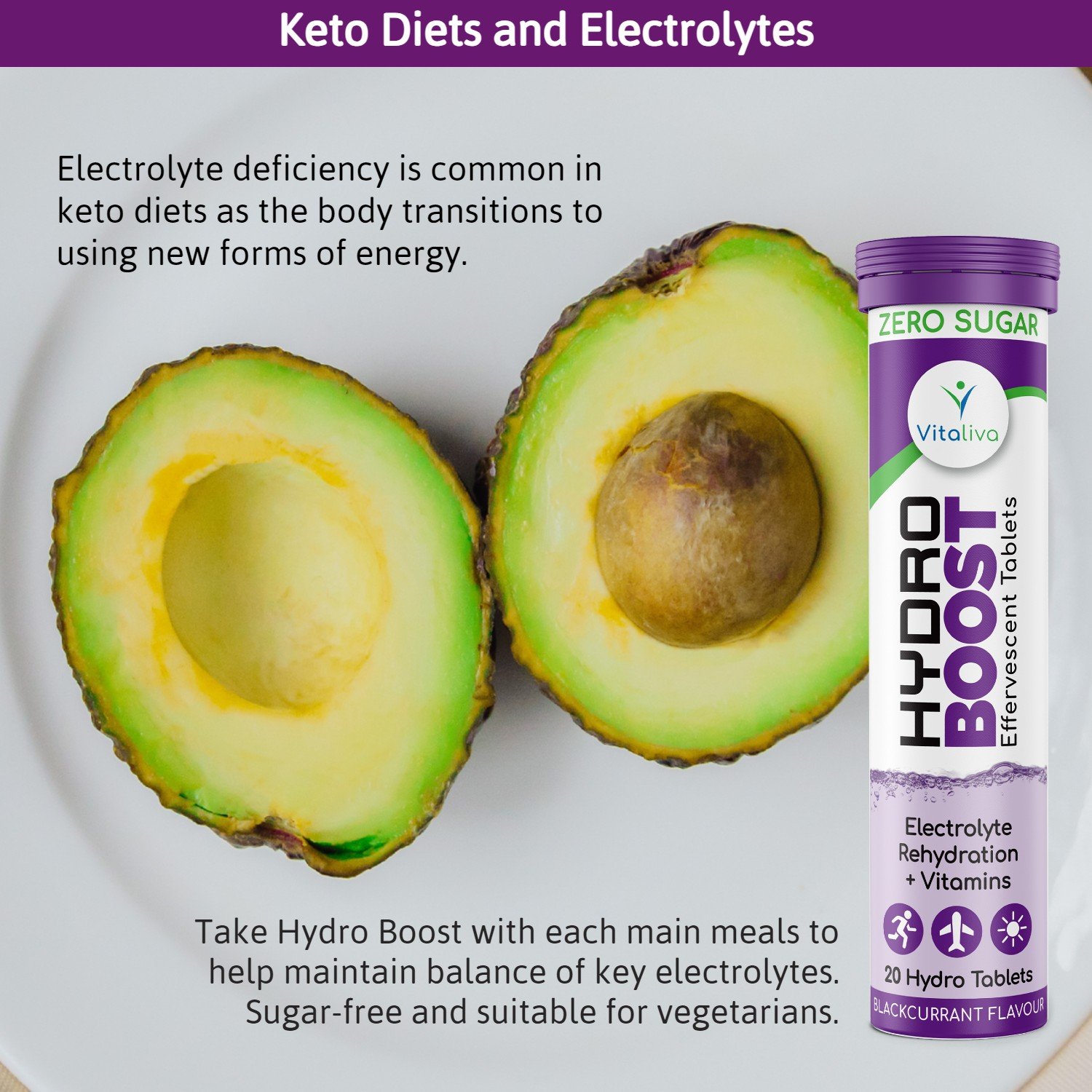
For most people juggling keto and vegan eating, a sugar-free effervescent tablet is the simpler daily habit. Our own Hydro Boost tablets are formulated to be keto-friendly, vegan and sugar-free, which removes the label-checking work each time you restock. Yes it does contain maltodextrin which is classed as a carbohydrate, but metabolically, it acts much like a simple sugar. Before jumping to conclusions, though, let me explain. If you look at the nutritional values on Hydro Boost, for example, carbohydrate is listed at just 0.5g. That tiny amount isn't there for energy—it’s simply a trace amount of maltodextrin acting as a binder or flavour carrier needed to press the tablet.
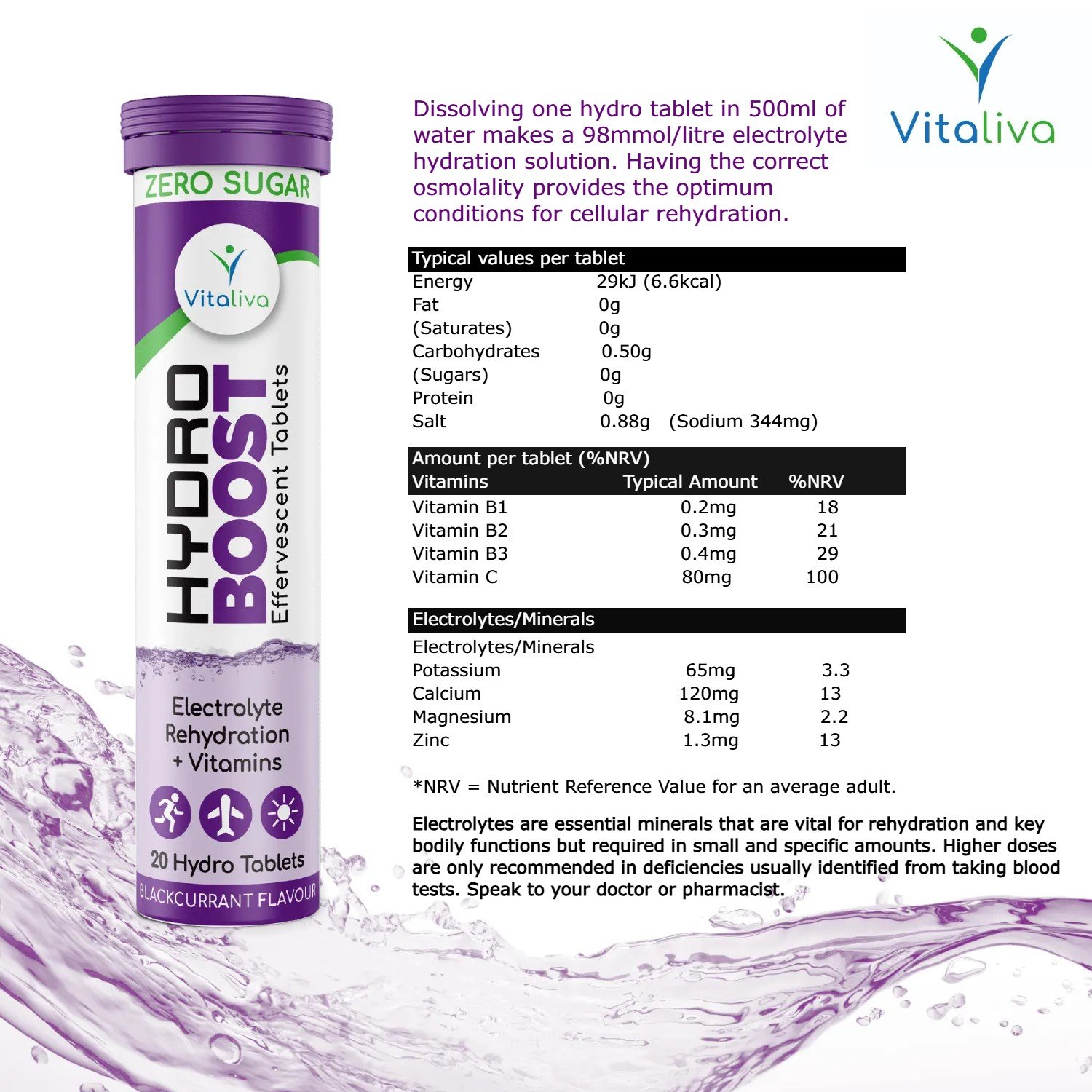
Hydro Boost Blackcurrant Flavour
How to Choose Vegan Electrolyte Powder or Tablets
Choosing a vegan electrolyte powder or tablet comes down to five checks: the mineral profile, the sweeteners, the certification, the dose per serving and the format. Get those right and most products on the shelf sort themselves out.
Hydro Boost Blackcurrant Flavour →
Reading the Label: What to Check First
Start with the ingredient list, then the nutrition panel, then the certifications. Most people read it in exactly the wrong order.
- Sodium, potassium and magnesium all listed with amounts per serving
- No sugar, maltodextrin, dextrose or glucose syrup
- Clearly marked vegan friendly
- No artificial colours, flavours or preservatives if you are avoiding additives
- A carbohydrate figure per serving you are comfortable with on keto
- A dose you can realistically take daily without running out mid-week
A common mistake is buying on flavour alone. The second most common is assuming "electrolyte" means all three major minerals, when plenty of products are mostly sodium with a token amount of the rest.
Our Hydro Boost the full range contains sodium, potassium, calcium and magnesium alongside several B vitamins and vitamin C. To top off it is fortified with zinc and is suitable for vegans and vegetarians. If you want to see the full breakdown, the Hydro Boost Blackcurrant product page (and above) lists exactly what is in each tablet.
Dosage, Timing and Potential Side Effects
There is no single correct dose, because needs vary with body size, sweat rate, climate and how strict your keto intake is. A sensible starting point is one serving daily, taken in the morning or around training, then adjust based on how you feel over a week or two. Ideally electrolytes should be taken around the same time as meals to mimic food intake.
Timing matters less than consistency. Taking electrolytes with water before you feel thirsty beats loading up after symptoms appear. If you train hard or sweat heavily, a second serving during or after exercise is reasonable.
Potential side effects are mostly digestive: too much magnesium at once can loosen the stool, and large single doses of sodium can leave you bloated. Spread your intake across the day rather than taking it all at once.
People with kidney conditions, high blood pressure or those taking diuretics or blood pressure medication should speak to their GP before adding electrolyte supplements. This is general guidance, not medical advice.
Conclusion
Getting electrolytes right on a vegan keto diet is a moving target, and most people only notice the problem once the headaches and cramps arrive. Closing the sodium, potassium and magnesium gap early is far easier than chasing it later.
At Vitaliva, our Hydro Boost tablets are built for exactly this: sugar-free, keto-friendly, vegan and gluten-free, with sodium, potassium, calcium, magnesium and added vitamins in a tablet you can carry anywhere. Customers tell us they notice the difference in how quickly they bounce back after training and travel, and our average customer rating is 4.5 from a possible 5.
If you want a daily hydration habit that fits keto and vegan eating without label-checking every time, add Hydro Boost to your routine. Add to basket and keep a tube in your gym bag, your desk drawer and your suitcase.
Frequently Asked Questions
Do you need electrolyte supplements on a vegan keto diet?
Many people do. Cutting carbohydrates lowers insulin, which prompts the kidneys to excrete more sodium and water. On top of that, a vegan keto diet is naturally low in the salty processed foods that usually top up sodium. A sugar-free electrolyte tablet or powder makes it easier to replace sodium, potassium and magnesium without adding carbs, especially on training days or in hot weather.
How can vegans get sodium, potassium and magnesium on keto?
Food first: add salt to meals, and use avocado, spinach, mushrooms, courgette, almonds, pumpkin seeds, tofu and unsweetened plant milks, which supply potassium and magnesium without pushing up carbs. LoSalt is a practical sodium and potassium top-up. Many people still fall short on heavy training days, which is where a vegan keto electrolyte supplement with all four key minerals earns its place.
Are electrolyte tablets suitable for a vegan keto diet?
They can be, but check two things. First, confirm the tablet is sugar-free and low enough in carbs to keep you in ketosis; sweeteners such as stevia or sucralose are common and do not affect blood sugar. Second, confirm it is certified vegan, since some formulas use gelatine or animal-derived vitamin D. Vitaliva Hydro Boost tablets are sugar-free, keto-friendly and suitable for vegans, with sodium, potassium, calcium, magnesium, B vitamins, vitamin C and zinc.
Can electrolyte supplements contain hidden sugars or animal-derived ingredients?
Yes. Some drink mixes list dextrose, maltodextrin or glucose syrup, which add carbs and can pull you out of ketosis. Others use gelatine capsules or lanolin-derived vitamin D. Read the full ingredient list rather than the front label, and look for a stated vegan claim. A clean formula should list its minerals clearly, carry no sugar, and say it is suitable for vegans.
When might someone following keto consider an electrolyte supplement?
The clearest cases are the first two weeks of keto, when sodium losses are highest; long or sweaty training sessions; hot weather; travel; and any stretch where you notice cramps, headaches, dizziness or fatigue that water alone does not fix. If you eat very few vegetables or salted foods, a daily tablet is a simple way to cover the gap without counting every milligram.
What should you look for in a vegan keto electrolyte supplement?
Look for sodium, potassium, magnesium and calcium in meaningful amounts, zero sugar, and no artificial colours or flavours. Check the vegan claim, the carb count per serving, and whether it dissolves cleanly. Tablets suit travel and gym bags; powders suit high-volume daily use. Price per serving matters too: Vitaliva Hydro Boost is £8.99 per tube, so compare that against how many servings you actually use each week.