

Why Electrolyte Tablets Taste Chalky: Causes & Fixes
Table of Contents
- The Real Reasons Electrolyte Tablets Taste Chalky
- How Electrolyte Tablet Ingredients Affect Taste
- The Genetics of Taste: Why Some People Notice Chalkiness More
- Why Do Electrolyte Powders Clump and How Does It Affect Chalkiness?
- How to Make Electrolyte Drinks Taste Better
- Choosing Electrolyte Tablets That Taste Good
- Conclusion
- Frequently Asked Questions
Last Updated: 19 October 2026
The Real Reasons Electrolyte Tablets Taste Chalky
If you have ever dropped an electrolyte tablet into water and winced at the gritty, powdery aftertaste, you are not imagining it. This guide from Vitaliva explains exactly why electrolyte tablets taste chalky, and what you can do about it.
The main cause is simple: mineral salts. The very ingredients that make electrolyte tablets work are the same ones that leave a chalky film in your mouth. Calcium, magnesium and potassium salts do not dissolve as cleanly as sodium does. When they linger on your tongue, you taste powder, not refreshment.
Below, we break down the causes and the fixes, so your next drink tastes as good as it works.
Mineral Salts and Their Mouthfeel
Mineral salts are compounds like calcium carbonate and magnesium oxide that carry the electrolytes your body needs. They are poorly soluble in cold water, which is why they coat the tongue and palate.
A common mistake is blaming the flavour. In practice, most chalkiness comes from the mineral blend itself. The higher the calcium and magnesium load, the more powder you feel.
Undissolved Particles and Chalkiness
Chalkiness is a texture problem, not a taste problem. Tiny particles that never fully dissolve sit on your tongue and register as grit.
Cold water makes this worse. Minerals dissolve more slowly in chilled water, so a tablet dropped into fridge-cold water often leaves residue at the bottom of the glass.
How Electrolyte Tablet Ingredients Affect Taste
Every ingredient in an electrolyte tablet changes how it tastes. Some add bitterness, some add grit, and some mask both.
Here is how the main players behave:
- Sodium dissolves well and tastes salty, but it is rarely the chalky culprit
- Calcium and magnesium leave the most residue and register as bitter or chalky
- Potassium can taste metallic at higher doses
- Citric acid adds tartness and helps the tablet fizz and disperse
- Sweeteners mask mineral notes, though sugar-free options can taste thin without them
The balance matters more than any single ingredient. A formula with heavy calcium and no acid to balance it will always taste chalky. A well-built formula uses acids and flavours to round off the mineral edge.
The Genetics of Taste: Why Some People Notice Chalkiness More
Taste is subjective. What one person finds smooth, another finds unbearable. The difference often comes down to biology.
Roughly 25% of people are supertasters, with a higher density of taste buds. Bitter and mineral compounds hit them hard. Another 25% are non-tasters, who barely notice the same flavours.
Genetics also shapes how you register specific compounds. Receptor genes such as TAS2R, which detect bitterness, vary widely between people (pubmed.ncbi.nlm.nih.gov). That is why one person tastes a clean berry drink and another tastes medicine.
Flavour is more than taste, too. Smell, mouthfeel, temperature and past experience all shape whether a drink feels refreshing or chalky. A cold, fizzy drink with a strong aroma reads as refreshing. The same liquid, warm and flat, reads as medicine.
Taste buds adapt as well. If you stick with a sugar-free, additive-free formula for a couple of weeks, the mineral edge fades. Many people find the sweetness of old favourites becomes cloying once they adjust.
Why Do Electrolyte Powders Clump and How Does It Affect Chalkiness?
Electrolyte powders clump because they absorb moisture from the air. Once damp, the particles stick together and resist dissolving, which leaves grit in your glass.
This is a storage problem as much as a formula problem. A tub left open in a steamy kitchen or bathroom will clump within days. Clumped powder then dissolves unevenly, and the undissolved lumps are exactly what you taste as chalk.
Hydro Boost Blackcurrant Flavour →
Tablets avoid much of this because each dose is sealed and dry. Still, a tablet dropped into cold water and drunk too quickly will leave residue. Give it time to fizz out fully.
A simple routine helps:
- Store powder in a sealed tub, away from steam and sunlight
- Use room-temperature water rather than fridge-cold water
- Stir or wait until fizzing stops before drinking
- Wipe the rim of the tub dry before closing it
How to Make Electrolyte Drinks Taste Better
You can fix most chalkiness with a few small changes. None of them require a new product.
Try these, in order of impact:
- Use the right amount of water. Too little water concentrates the minerals and the grit. Follow the label.
- Let it dissolve fully. Wait until the fizzing stops. Rushing it leaves particles behind.
- Switch to cooler, not coldest, water. Room-temperature water dissolves minerals faster than icy water.
- Add a squeeze of lemon or lime (or a drop of Vimto!)
- Chill the finished drink. Cold masks chalky texture, even though cold water slows dissolving. Mix first, then chill.
- Rotate flavours. Your palate dulls with repetition. Switching between blackcurrant and red berry keeps drinks interesting.
If you are coming from a heavily sweetened powder, expect an adjustment period. Sugar-free formulas taste different at first. Most people adapt within a week or two. Remember taste buds adapt with prolonged exposure.
Choosing Electrolyte Tablets That Taste Good
The best electrolyte tablet is the one you will actually drink. Taste matters as much as the mineral profile, because a drink you avoid does nothing for your hydration.
Here is what to check before you buy:
What to check |
Why it matters |
What to look for |
|---|---|---|
Mineral blend |
Calcium and magnesium cause most chalkiness |
Balanced blend, sodium-led |
Dissolving speed |
Slow tablets leave grit |
Effervescent format |
Sweeteners |
Sugar-free can taste thin or bitter |
Clean sweetener, no odd aftertaste |
Additives |
Artificial colours and flavours can taste chemical |
No artificial additives |
Format |
Powders clump, tablets stay dry |
Sealed tablets for travel |
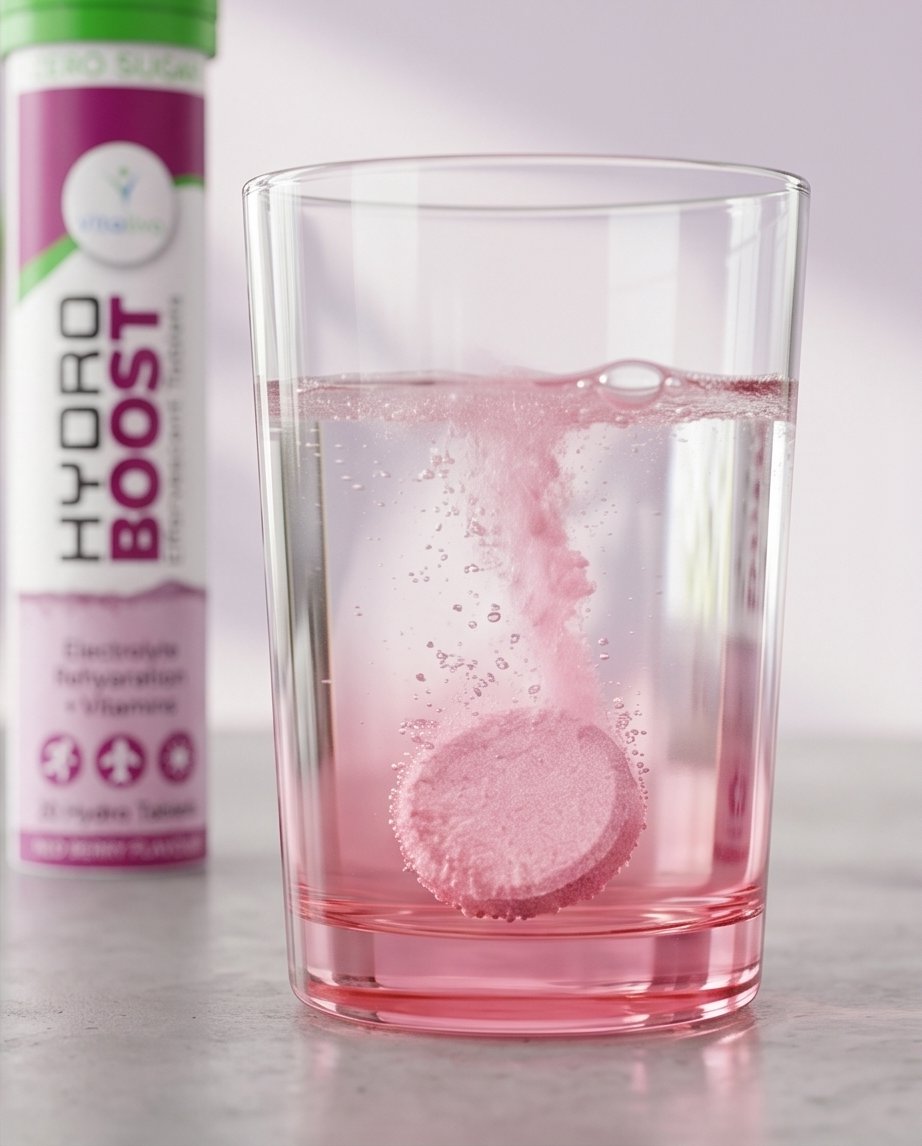
At Vitaliva, our Hydro Boost tablets are built around this problem. They use an effervescent format that dissolves fully, with no artificial colours, flavours or preservatives. The formula is sugar-free, vegan and keto-friendly, and it comes in blackcurrant and red berry (strawberry and raspberry).

Customer feedback backs this up. "Lovely taste and not too sweet," says LadyK 1957. Chris Lee puts it plainly: "They work a treat and taste great." Helen C adds that a flavoured drink is "easier than just plain water."
We are a small business selling around 1,000 packs a week, with 88% of customers rating us four stars or better. Hydro Boost costs £8.99 for 2 tubes.
Conclusion
Chalky electrolyte tablets are a texture problem with a clear cause: mineral salts that do not dissolve cleanly, made worse by cold water, clumping and rushed mixing. Your genes play a part too, but the fix is mostly in your hands.
Choose an effervescent tablet with a balanced mineral blend, mix it properly, and give your taste buds a week to adapt. If you want a clean, sugar-free option that dissolves fully and tastes refreshing, try Vitaliva Hydro Boost in blackcurrant or red berry. Add to basket and make hydration something you look forward to.
Frequently Asked Questions
Why do electrolyte tablets taste chalky?
Chalkiness in electrolyte tablets usually comes from mineral salts like calcium and magnesium, which have a naturally powdery mouthfeel. If the tablet hasn't fully dissolved, tiny particles can also create a gritty texture. Some people are genetically more sensitive to these compounds, making the chalkiness seem stronger. Using a well-formulated tablet that dissolves completely and balances minerals with flavour can reduce the sensation.
Which ingredients can make an electrolyte drink taste chalky?
Calcium carbonate, magnesium oxide, and some forms of potassium can contribute to a chalky texture. Artificial sweeteners and certain preservatives may also add a chemical aftertaste that some perceive as chalky. Checking the electrolyte tablet ingredients list for these compounds can help you choose a smoother option. Tablets with natural flavours and no artificial additives often taste cleaner.
How can I make an electrolyte drink taste less chalky?
Try dissolving the tablet in cold water and stirring well to ensure full dispersion. Adding a squeeze of lemon or lime can mask mineral tastes. Drinking it colder can also reduce the perception of chalkiness. If you're using a powder, mix it thoroughly to avoid clumps. Choosing a tablet with a flavour you enjoy, like berry or blackcurrant, can make the experience more pleasant.
Do sugar-free electrolyte tablets taste different from sugary ones?
Yes, sugar-free tablets often rely on sweeteners that can have a different mouthfeel and aftertaste compared to sugar. Some people find sugar-free versions more chalky or bitter because the sweetness doesn't fully mask the mineral salts. However, well-designed sugar-free tablets use flavourings and acids to balance the taste. Personal preference plays a big role, so you may need to try a few to find one you like.