

Are Electrolyte Tablets Safe for Daily Use? A 2026 Guide
Table of Contents
- The Daily Hydration Dilemma: Are Electrolyte Tablets Safe for Daily Use?
- The Benefits of Daily Electrolyte Tablets
- How Many Electrolyte Tablets Per Day Should You Take?
- Electrolyte Tablets and Kidney Disease: What You Need to Know
- Electrolytes During Pregnancy: A Cautious Approach
- How to Read Electrolyte Nutrition Labels
- Making Electrolyte Tablets Part of Your Routine
- Frequently Asked Questions
Last Updated: October 8, 2026
The Daily Hydration Dilemma: Are Electrolyte Tablets Safe for Daily Use?
Are electrolyte tablets safe for daily use? Yes, for most healthy adults they are, but the answer depends on your kidneys, your heart, your activity level and how much sodium each tablet delivers. Electrolyte tablets are compact effervescent supplements that dissolve in water to replace the minerals you lose through sweat, and they have become a daily habit for runners, gym-goers and frequent flyers.
At Vitaliva, we make zero-sugar effervescent tablets, so this question lands on our desk constantly.
The catch is that "safe" is not the same as "suitable for everyone, at any dose." Sodium is the mineral that matters most here, and it is also the one that causes the most trouble for people with heart failure, kidney disease or high blood pressure. Pregnancy adds another layer of caution.
Below, we break down who can take electrolyte tablets every day, how many to take, and the warning signs that mean you should check with a doctor first.
The Benefits of Daily Electrolyte Tablets
Daily electrolyte tablets help you hold onto water and replace the sodium, potassium, calcium and magnesium lost through sweat. That matters more than most people realise, because plain water alone does not always rehydrate you quickly.
Here is what regular use can support:
- Faster rehydration than water on its own, especially after heavy sweating
- Fewer cramps and headaches linked to low sodium and potassium
- Steadier energy levels through the day
- Better workout recovery when taken after training
- Electrolyte balance for people on keto, vegan or gluten-free diets
The people who benefit most tend to be those who sweat a lot, train hard, travel often or follow a low-carb diet. If you sit at a desk all day and drink plenty of water, you likely need less.
The NHS guidance on hydration and fluid intake is a sensible starting point for working out your baseline fluid needs.
How Many Electrolyte Tablets Per Day Should You Take?
Most adults need no more than one electrolyte tablet per day for general hydration, and up to two on heavy training or travel days. The right number depends on your sweat rate, the weather and what you eat.
Use this as a rough guide:
Situation |
Tablets per day |
Why |
|---|---|---|
Desk work, mild activity |
0-1 |
Diet usually covers your needs |
Gym session or run |
1 |
Replaces sweat losses |
Long training or hot weather |
1-2 |
Higher sodium and fluid loss |
Long-haul travel |
1-2 |
Counters cabin dehydration |
Pregnancy or kidney condition |
Ask your GP |
Sodium limits may apply |
More is not better. Sodium is the main electrolyte in most tablets, and taking too much over time can raise blood pressure. Spread your intake across the day rather than doubling up at once.
Electrolyte Tablets and Kidney Disease: What You Need to Know
Electrolyte tablets and kidney disease are a risky combination, because damaged kidneys struggle to filter out excess potassium and sodium. For anyone with chronic kidney disease, a daily tablet can do more harm than good.
The same caution applies to heart failure. Many people with heart failure are on a sodium-restricted diet, and a single electrolyte tablet can undo that in one glass of water. If you are on diuretics or blood pressure medication, the balance shifts again.
You can learn more about reading nutrition labels and safe limits through the National Kidney Foundation's guidance on sodium and potassium.
If any of the following apply, speak to your GP or renal team before starting:
- Diagnosed chronic kidney disease
- Heart failure or a sodium-restricted diet
- Taking diuretics, ACE inhibitors or potassium-sparing drugs
- A history of high blood pressure
For everyone else, a daily tablet is generally well tolerated. But if you are unsure where you sit, a quick blood test will tell you more than any label.
Hydro Boost Blackcurrant Flavour →
Electrolytes During Pregnancy: A Cautious Approach
Electrolytes during pregnancy deserve extra care, because sodium intake should be controlled while you are expecting. Mild dehydration is common in pregnancy, but that does not mean a daily electrolyte tablet is the right fix.
Plain water and a balanced diet usually cover your needs. If you are vomiting often, sweating heavily or your midwife has flagged low electrolytes, a supplement may help, but only under medical guidance.
Points to keep in mind:
- Sodium should be kept in check, so read the label before you buy
- Sodium (alginate) is also a common ingredient in preparations like Gaviscon taken for heartburn
- Some tablets contain added vitamins that may exceed pregnancy limits
- Always check with your midwife, pharmacist or GP first
- Choose a zero-sugar option if you do take one
There is no single "safe" number for every pregnancy. Your needs shift trimester by trimester, so let your midwife set the limit.
How to Read Electrolyte Nutrition Labels
Reading an electrolyte nutrition label comes down to three numbers: sodium, potassium and sugar. Get those right and you can judge almost any tablet in seconds.
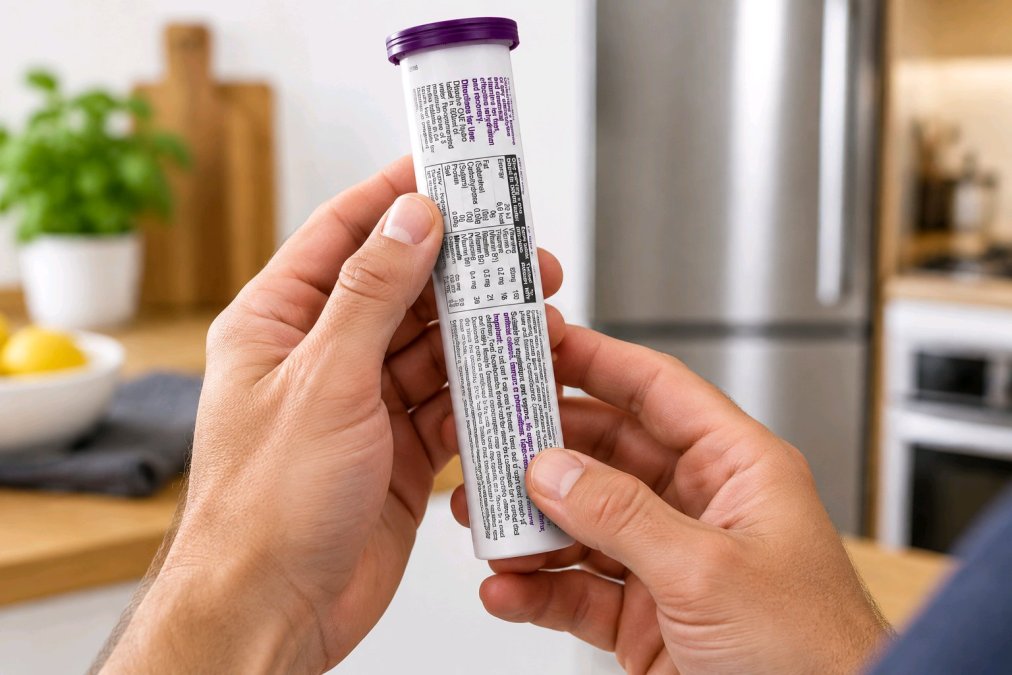
Start with the per-tablet column, not the per-100g column. Then check:
- Sodium (or listed as salt): the main mineral, and the one to watch if you are limiting salt
- Potassium: important for cramps, but risky if your kidneys are impaired
- Magnesium and calcium: smaller amounts, still worth noting
- Sugar: zero-sugar formulas avoid empty calories
- Additives: look for no artificial colours or preservatives, and gluten or lactose
A common mistake is comparing tablets by price alone. A cheap tablet with a huge sodium hit is not a bargain if it pushes you over your daily limit. Our own Hydro Boost tablets list sodium, potassium, calcium and magnesium clearly, plus B vitamins, vitamin C and zinc, so you can see exactly what you are getting in each serving.
Making Electrolyte Tablets Part of Your Routine
Building electrolyte tablets into your routine works best when you match the timing to your day, not the calendar. One tablet after training, or one during a long flight, is usually enough.
A simple approach:
- Take one tablet in the morning on training days
- Use one during long travel to counter dry cabin air
- Skip the tablet on rest days if your diet is already balanced
- Drink plain water alongside it through the day
- Review your intake every few months
If you are healthy and active, a daily tablet is a reasonable habit. If you have a heart or kidney condition, or you are pregnant, treat it as a medical decision, not a lifestyle one.
For a zero-sugar option that fits a keto, vegan or gluten-free diet, our Hydro Boost Blackcurrant and Hydro Boost Red Berry tablets deliver sodium, potassium, calcium and magnesium with B vitamins, vitamin C and zinc, and no artificial colours or preservatives.


Frequently Asked Questions
Are electrolyte tablets safe to take every day?
For most healthy adults, daily electrolyte tablets are safe when used as directed. They help maintain hydration and support energy levels, especially if you exercise regularly or live in a hot climate. However, if you have kidney disease, heart failure, or are pregnant, you should speak to a doctor first. Always follow the recommended dose on the label and avoid exceeding it.
How many electrolyte tablets can you take in a day?
The safe amount depends on your activity level, climate, and diet. For example, one Hydro Boost tablet provides a balanced mix of sodium, potassium, calcium, and magnesium. If you are very active or sweat heavily, you might need more, but always check with a healthcare professional before increasing your intake.
Who should avoid electrolyte tablets?
People with kidney disease, heart failure, or those on sodium-restricted diets should avoid electrolyte tablets unless a doctor approves. During pregnancy, sodium intake should be controlled, so consult your midwife or GP before use. If you have high blood pressure or take diuretics, check with your pharmacist. Always read the label for sodium content and avoid if you need to limit it.
Can you have too many electrolytes?
Yes, consuming too many electrolytes can lead to imbalances, which may cause nausea, fatigue, or more serious issues. The risk is higher if you have underlying health conditions. Stick to the recommended daily amount and avoid combining multiple supplements without medical advice. If you experience symptoms like swelling or irregular heartbeat, stop use and seek medical help.
The real challenge with daily hydration is not finding a tablet, it is finding one you can trust to be honest about what is inside. At Vitaliva, we make zero-sugar effervescent tablets that are vegan, gluten-free, lactose-free and keto-friendly, with a clear label you can actually read. Get started with Vitaliva and make your daily hydration simple, honest and effective.