

How to Stop Muscle Cramps After Running: 7 Fixes That Work
Last Updated: October 23, 2026
Quick Summary
To stop muscle cramps after running, stop and stretch the cramped muscle gently for 20 to 30 seconds, massage it, and sip fluids with electrolytes rather than plain water. Most cramps ease within a few minutes, but repeat cramps signal tired muscles, low electrolytes or too-fast training jumps.
- Calf cramps usually return because the muscle is overloaded, electrolytes are low, or distance ramps up too fast.
- Most cramps last from a few seconds to around 15 minutes; repeat cramps can leave soreness for 24 to 48 hours.
- Sip an electrolyte drink in the hour after a long run rather than downing it all at once.
- Add distance in small steps and keep one easy week in every four to prevent repeat cramps.
- Worn shoes change how your foot lands and load the calf differently, so check your footwear.
Table of Contents
- Why Muscle Cramps Strike After Running
- How to Relieve Muscle Cramps When They Hit
- Calf Cramps After Running: Why They Keep Coming Back
- How Long Do Muscle Cramps Last After Running?
- Hydration and Electrolytes for Runners: What Actually Helps
- Step-by-Step Prevention Plan for Your Next Run
- Common Mistakes That Make Cramps Worse
- Conclusion
- Frequently Asked Questions
Why Muscle Cramps Strike After Running
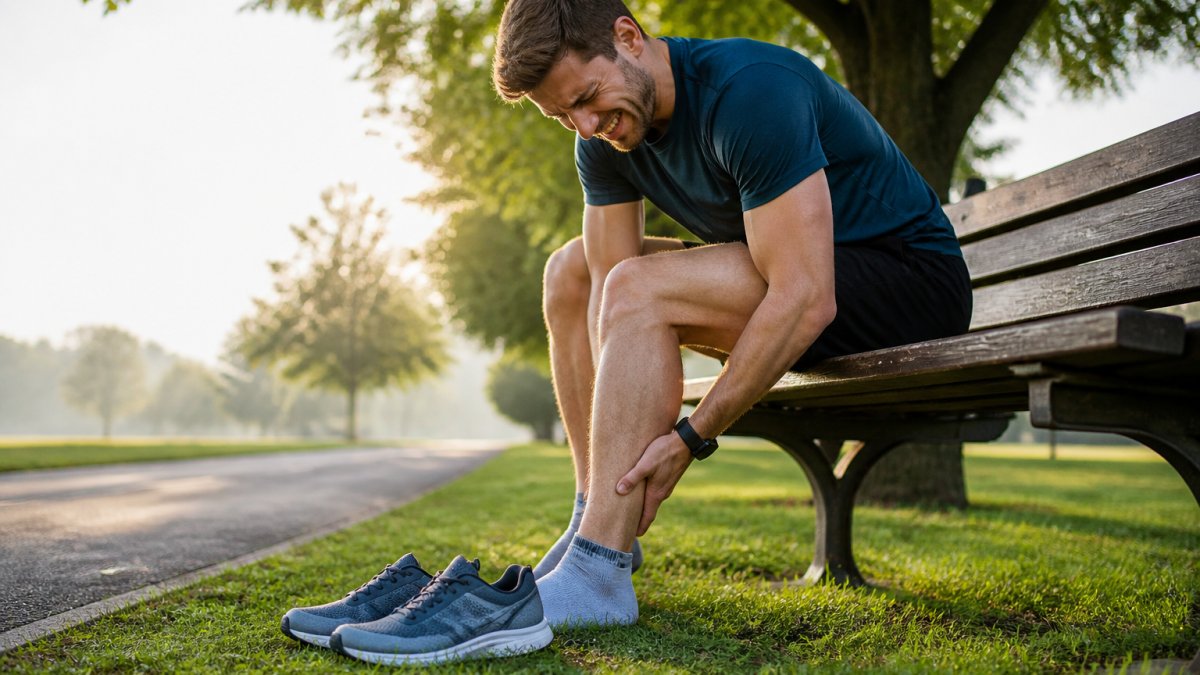
Muscle cramps after running are sudden, involuntary contractions that most often hit the calves, hamstrings or sole of your feet, usually in the hours after you stop rather than mid-stride. At Vitaliva, we hear the same story from runners again and again: the run felt fine, then the calf locked up on the sofa.
The cause is rarely one single thing. It is usually a mix of tired muscles, fluid loss and electrolytes lost through sweat. Cold muscles after a warm run can also tighten up quickly once you stop moving. Here, a warm-down is essential.
Below, we explain how to stop muscle cramps after running, from the first twinge to a full prevention plan. But first, here is what most guides get wrong: they tell you to stretch more. Stretching helps, but it does not fix the underlying trigger.
How to Relieve Muscle Cramps When They Hit
Stop and deal with the cramp immediately. Trying to run through it usually makes the spasm last longer.
Here is what to do, in order:
- Stop the activity and sit down.
- Gently stretch the cramped muscle. For a calf, pull your toes towards your shin.
- Hold the stretch for 20 to 30 seconds, then release slowly.
- Massage the muscle with your hand or a foam roller.
- Sip fluids with electrolytes rather than plain water alone.
Most cramps ease within a few minutes once you stretch and relax the muscle. If it keeps returning, treat that as a signal, not bad luck.
For a fast recovery routine, our guide on how to rehydrate quickly after a workout walks through the steps in detail.
Calf Cramps After Running: Why They Keep Coming Back
Calf cramps after running are the most common type, and they usually return for one of three reasons. The muscle is overloaded, the electrolytes are low, or the runner ramps up distance too fast.
The calf does a huge amount of work on every stride. When you add hills, speed work or a longer run than usual, it tires before the rest of your legs. A tired muscle is far more likely to spasm.
There is also a training pattern we see often. Runners build distance quickly, skip easy days, and then wonder why the same calf locks up every week. The fix is boring but effective: build mileage gradually and give the calf time to adapt.
If the cramp always strikes the same spot, check your footwear too. Worn shoes change how your foot lands and load the calf differently.
How Long Do Muscle Cramps Last After Running?
Most muscle cramps after running last anywhere from a few seconds to around 15 minutes. A mild twinge can pass almost instantly once you stretch. A severe spasm may linger for longer and leave the muscle sore for a day or two.
How long do muscle cramps last after running when they keep coming back? That pattern points to an ongoing trigger, such as low electrolytes or fatigue, rather than a one-off event. In that case, the soreness can hang around for 24 to 48 hours.
Watch for these warning signs that a cramp needs more than a stretch:
- The muscle stays tight and painful for hours
- Swelling, redness or heat around the area
- Weakness that does not improve with rest
- Cramps that wake you at night, again and again
Persistent or severe cramps deserve a chat with a GP or physiotherapist. It is better to rule out other causes early.
Here is how long cramps tend to last, and what a repeating pattern may mean.
Situation |
How long it lasts |
What it suggests |
|---|---|---|
Mild twinge |
Passes almost instantly once you stretch |
A one-off event |
Typical cramp |
A few seconds to around 15 minutes |
Normal spasm |
Severe spasm |
Lingers longer, muscle sore for a day or two |
Muscle overload |
Cramps that keep coming back |
Soreness can hang around for 24 to 48 hours |
Ongoing trigger such as low electrolytes or fatigue |
Hydration and Electrolytes for Runners: What Actually Helps
Hydration and electrolytes for runners matter because sweat carries out sodium, potassium, calcium and magnesium. Replacing fluid without replenishing salts can trigger muscle cramps and further dilute your body's remaining electrolytes.
Hydro Boost Blackcurrant Flavour →
Water alone is not always enough after a long, sweaty run. You need the minerals back too. This is where a well-made electrolyte tablet earns its place in your kit bag.
More does not mean better, though. We have fine-tuned Hydro Boost for optimal rehydration rather than piling in the biggest possible dose. Each tablet contains a blend of 344mg sodium, 65mg potassium, 102mg calcium and 8.1mg magnesium, plus Vitamins B1, B2 and B6 and 100% of your daily Vitamin C.
Our Hydro Boost electrolytes are sugar-free, vegan-friendly and keto-friendly. For a closer look at how the formula compares, see our buying guide to hydration tablets for endurance.
Step-by-Step Prevention Plan for Your Next Run
Prevention beats treatment every time. This plan targets the real triggers: tired muscles, low salts and sudden training jumps.
Before the run:
- Drink water through the day, not just before you leave.
- Have a salty snack or an electrolyte drink if it is warm.
- Warm up with 5 minutes of easy jogging and leg swings.
During the run:
- Sip fluids on runs longer than 45 minutes.
- Keep the pace easy on most runs.
- Avoid a big jump in distance or hill work.
After the run:
- Cool down with easy walking, then stretch the calves and hamstrings.
- Rehydrate with an electrolyte drink within the first hour.
- Refuel with a meal that includes some salt.
For a deeper pre-run routine, our article on how to prevent muscle cramps during exercise sets out the tactics in full.
Common Mistakes That Make Cramps Worse
Several everyday habits make muscle cramps after running more likely, and most are easy to fix.
- Stretching cold, hard. Bouncing into a deep stretch on a tight muscle can trigger a spasm. Warm up first.
- Drinking only water after a sweaty run. You replace the fluid but not the salts you lost.
- Skipping recovery days. Tired muscles cramp more easily, so rest is part of the plan.
- Ignoring the early twinge. A small cramp is a warning. Deal with it before it becomes a full spasm.
- Wearing worn-out shoes. Flat, tired cushioning changes your stride and loads the calf.
What most guides miss is how much these small habits stack up. Fix two or three and most runners notice a real difference within a few weeks.
Conclusion
Cramps after a run are frustrating, but they are rarely random. Tired muscles, low electrolytes and quick training jumps explain most cases, and each one has a fix.
If you want a simple way to replace the salts you lose, our sugar-free Hydro Boost tablets come in Blackcurrant and Red Berry flavours at £8.99 a tube. They are vegan, keto-friendly and built for fast rehydration after a run.
Explore the Hydro Boost range and pick your flavour. Add to basket and keep a tube in your kit bag, ready for your next long run.
Frequently Asked Questions
What should I do when I get a muscle cramp after running?
Stop and gently stretch the cramped muscle, then walk slowly to keep blood moving. For a calf cramp, straighten the leg and pull the toes towards you until the tightness eases. Sip water with electrolytes rather than plain water alone, since you lose sodium and potassium through sweat. Avoid aggressive massage straight away; light pressure is fine once the spasm settles. If the cramp keeps returning in the same spot, rest for the day and check your hydration and electrolyte intake over the following 24 hours.
How long do muscle cramps last after running?
Most post-run cramps ease within a few seconds to a few minutes once you stretch and stop the muscle contracting. Lingering soreness or tightness can last several hours, and some runners feel tenderness the next day.
Can dehydration cause cramps after running?
Yes. Sweating during a run loses fluid and electrolytes, particularly sodium, and that imbalance is one of the most common triggers for cramps. Drinking plain water alone can dilute what sodium remains, so hydration and electrolytes for runners should go together. A drink or tablet that replaces sodium, potassium, calcium and magnesium is more useful than water on its own after a sweaty session.
Should I use heat or ice for a cramp after running?
Use gentle heat or a warm bath once the acute spasm has passed, because warmth relaxes the muscle and improves blood flow. For immediate relief, stretching and slow walking beat both. Otherwise, a warm shower after your cool-down is a simple way to help the muscle settle.
Muscle cramps after running do not have to keep derailing your training. At Vitaliva, we make zero-sugar electrolyte tablets that dissolve in seconds and help you rehydrate fast, with key electrolytes and B vitamins in every tablet. Get started with Vitaliva and give your muscles the salts they lose on every sweaty run.
